
Cognition
Context Collapse: One Post, Several Audiences
Provider illustration accompanying Context Collapse: One Post, Several Audiences
Infographic library
Provider illustration accompanying Context Collapse: One Post, Several Audiences
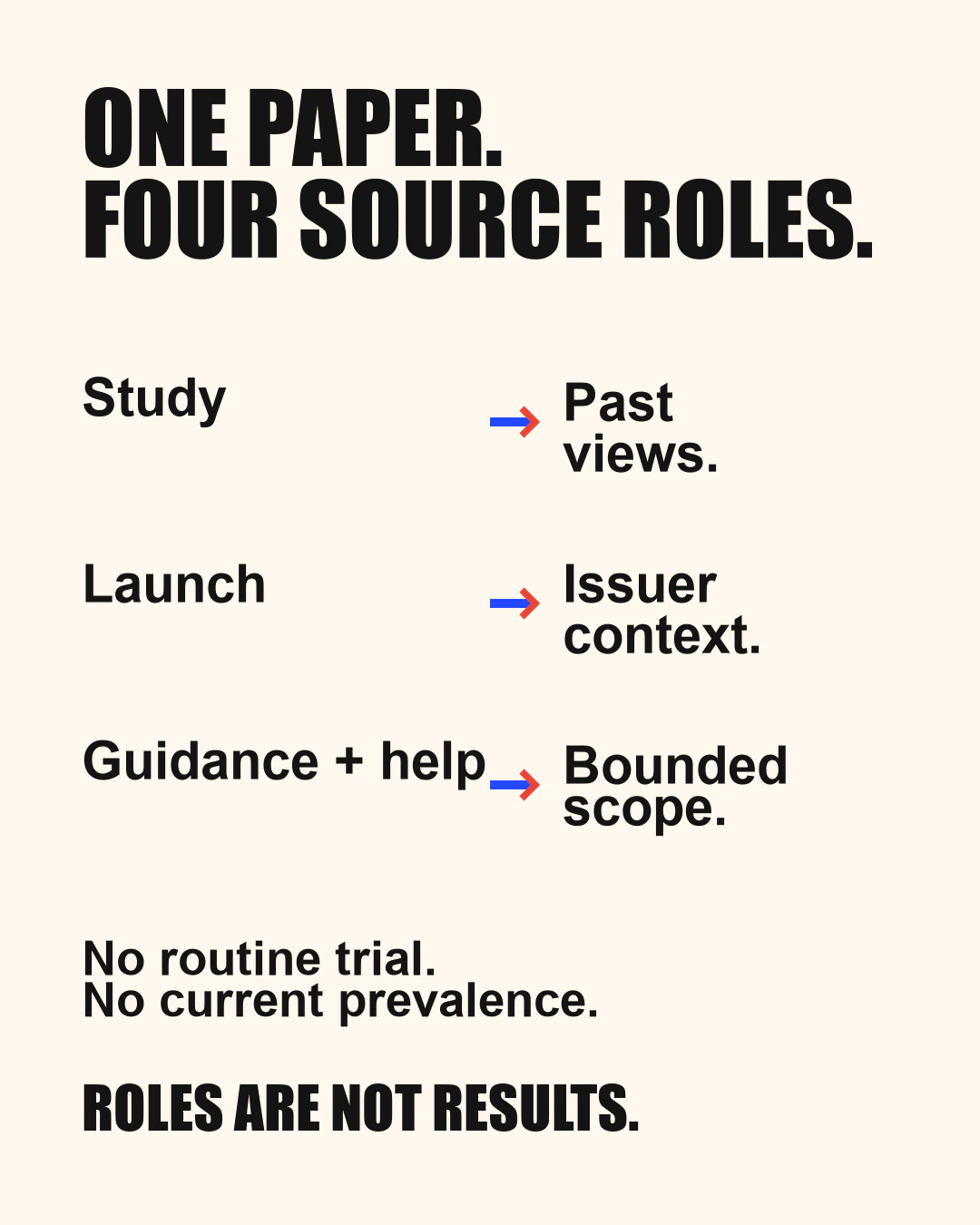
Provider evidence infographic visual
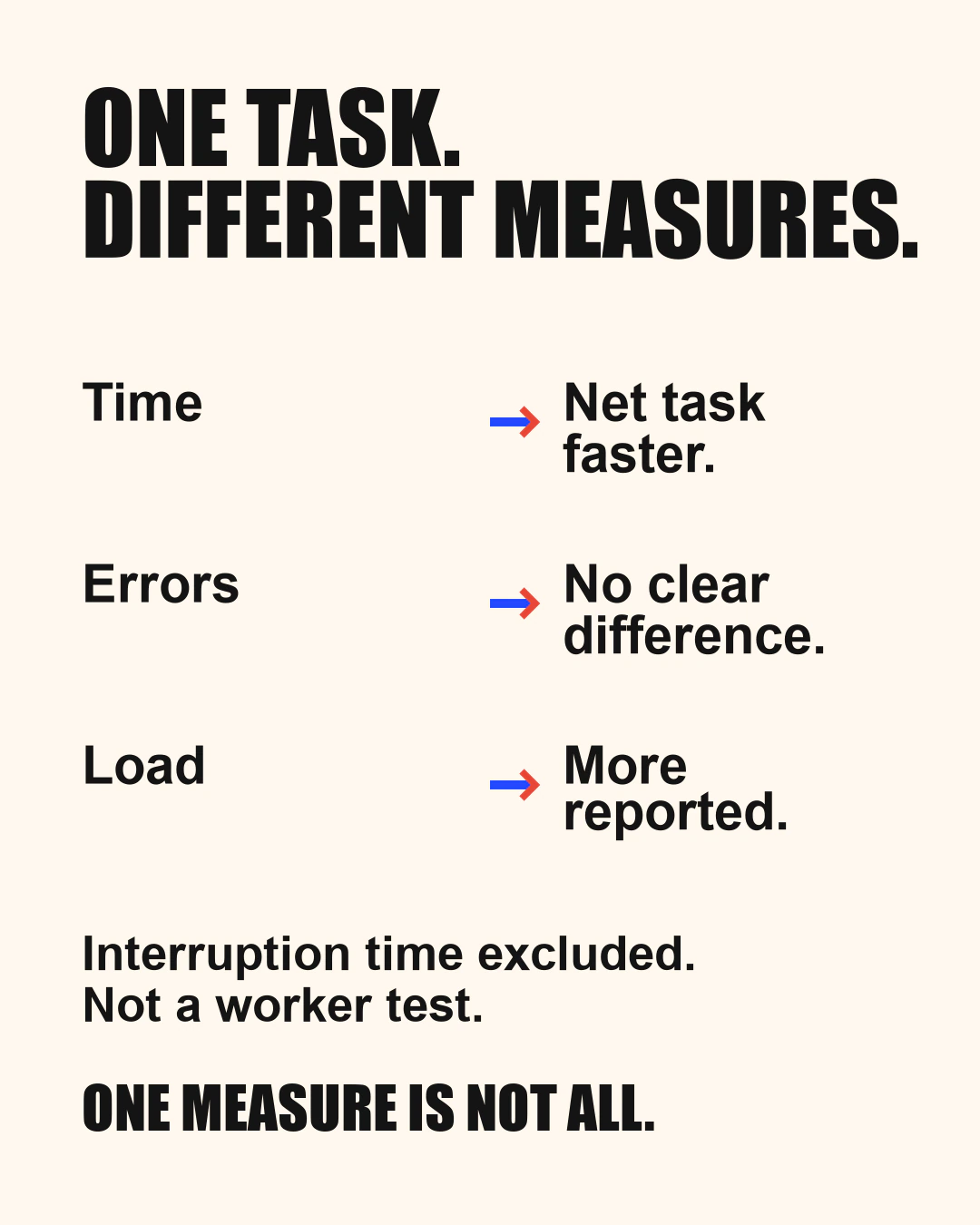
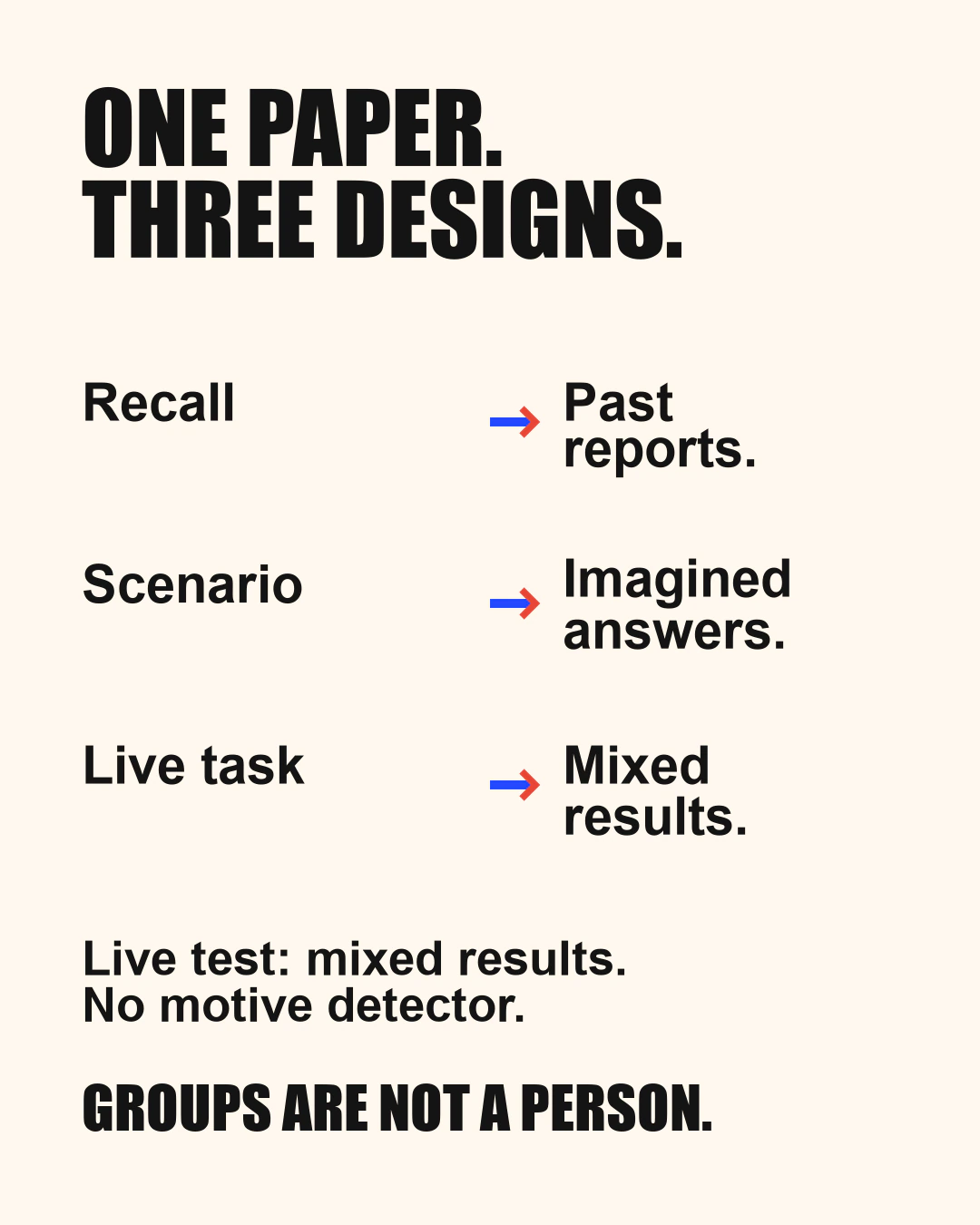
Provider evidence infographic visual
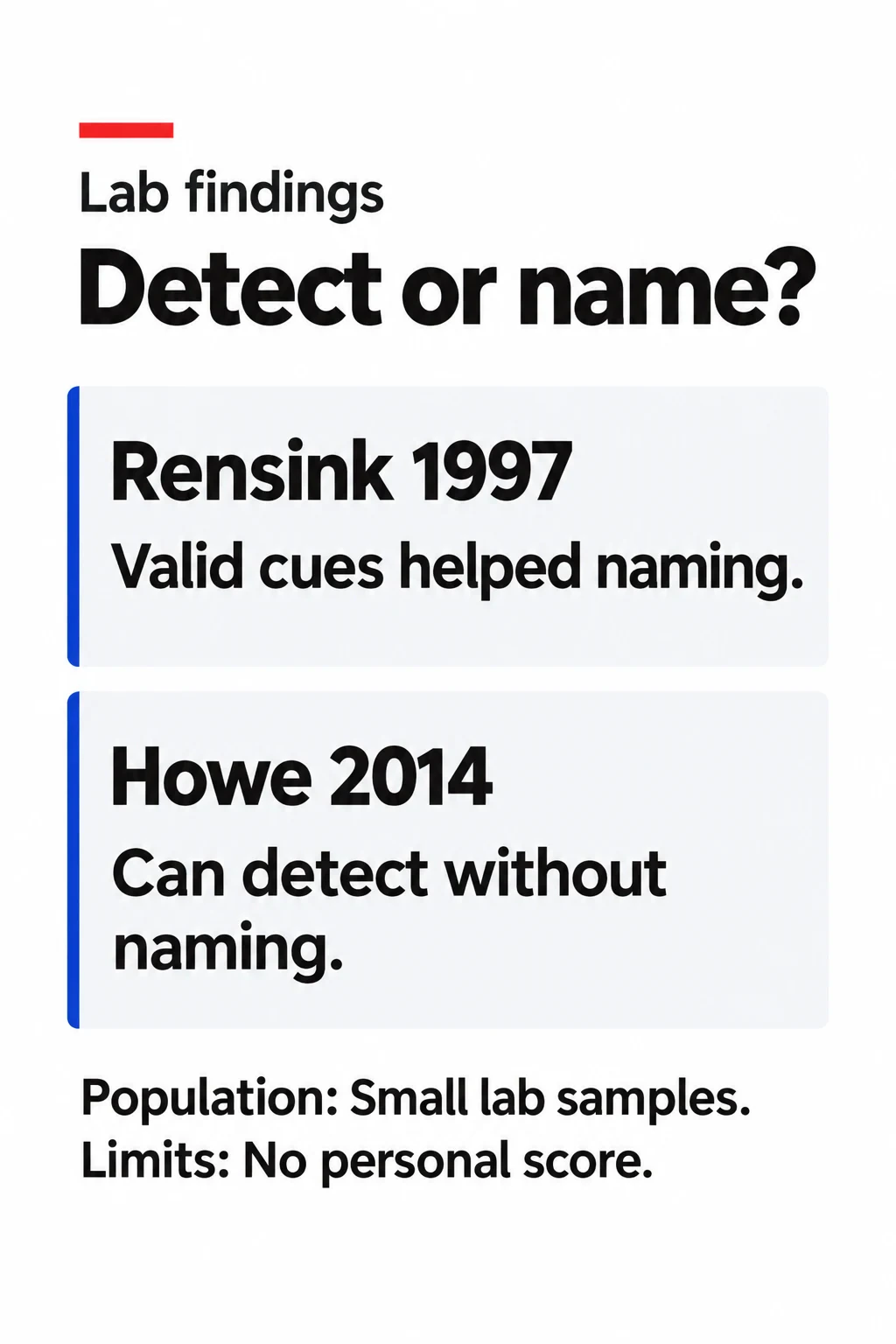
Two source-labelled laboratory findings: valid cues helped identification; some conditions allowed detection without identification.
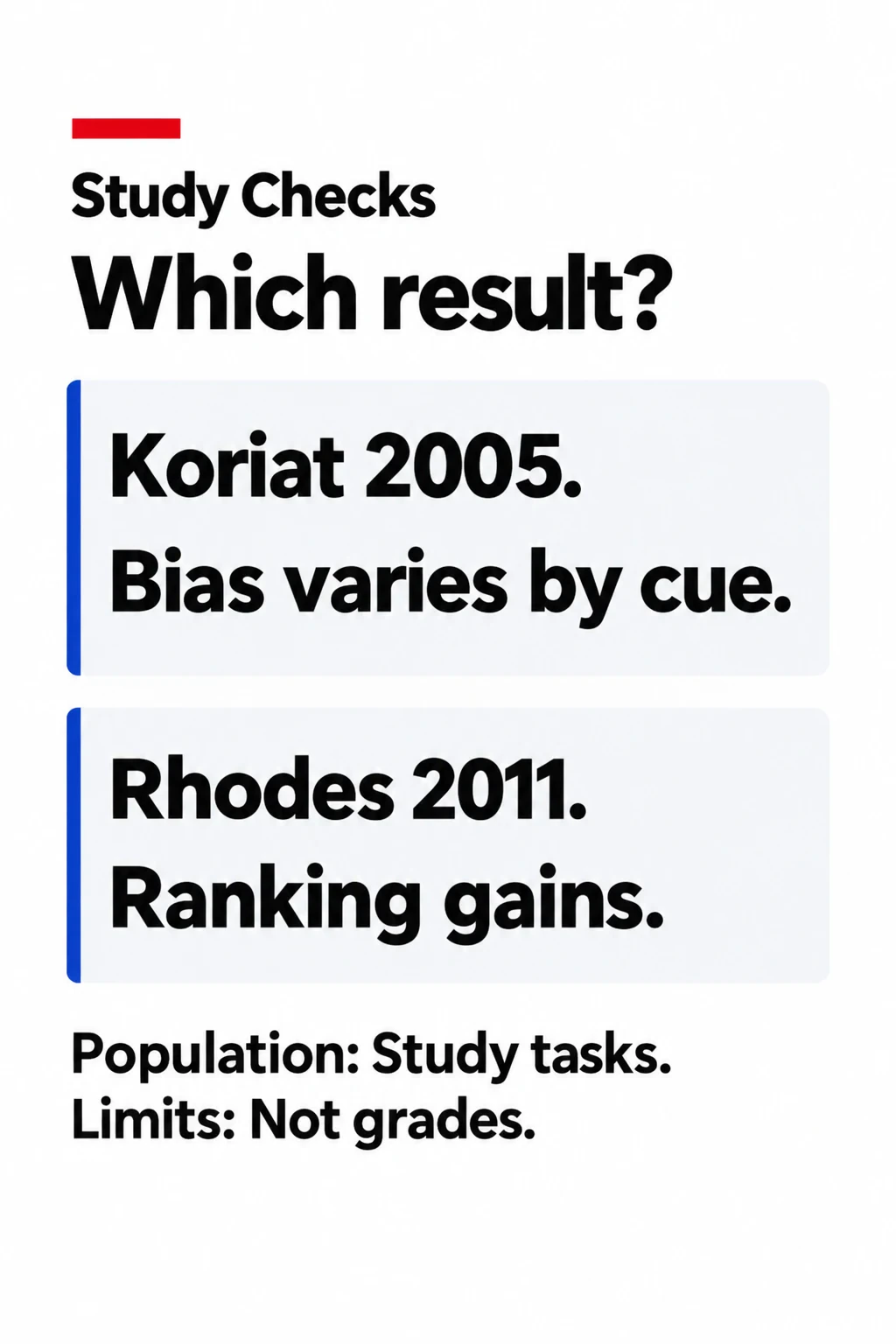
Feeling Ready Is Not the Same as Knowing: Calibrating Confidence technical infographic
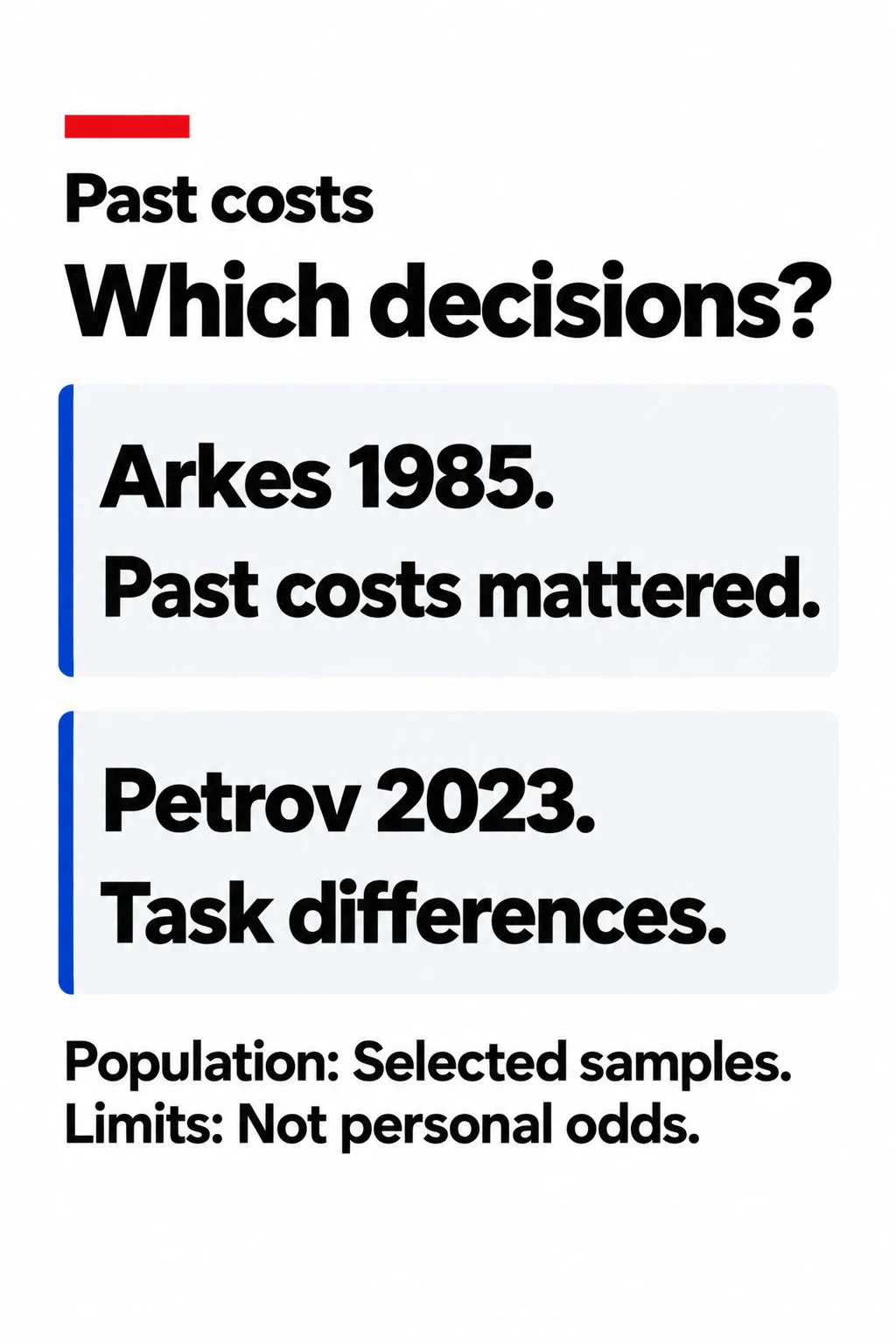
The Sunk-Cost Effect: When Past Spending Traps a New Decision technical infographic
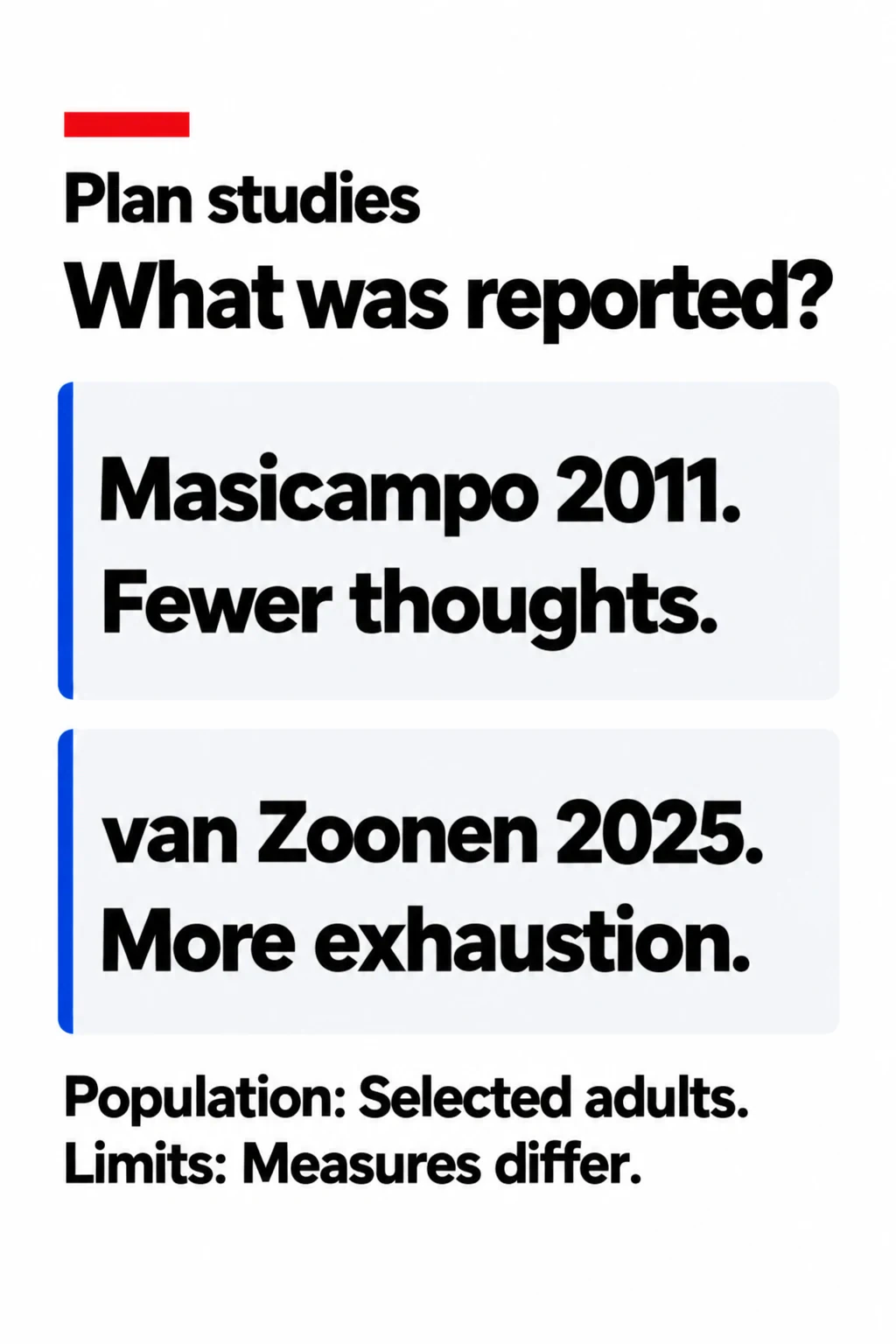
Attention Residue: Why Unfinished Work Follows You technical infographic
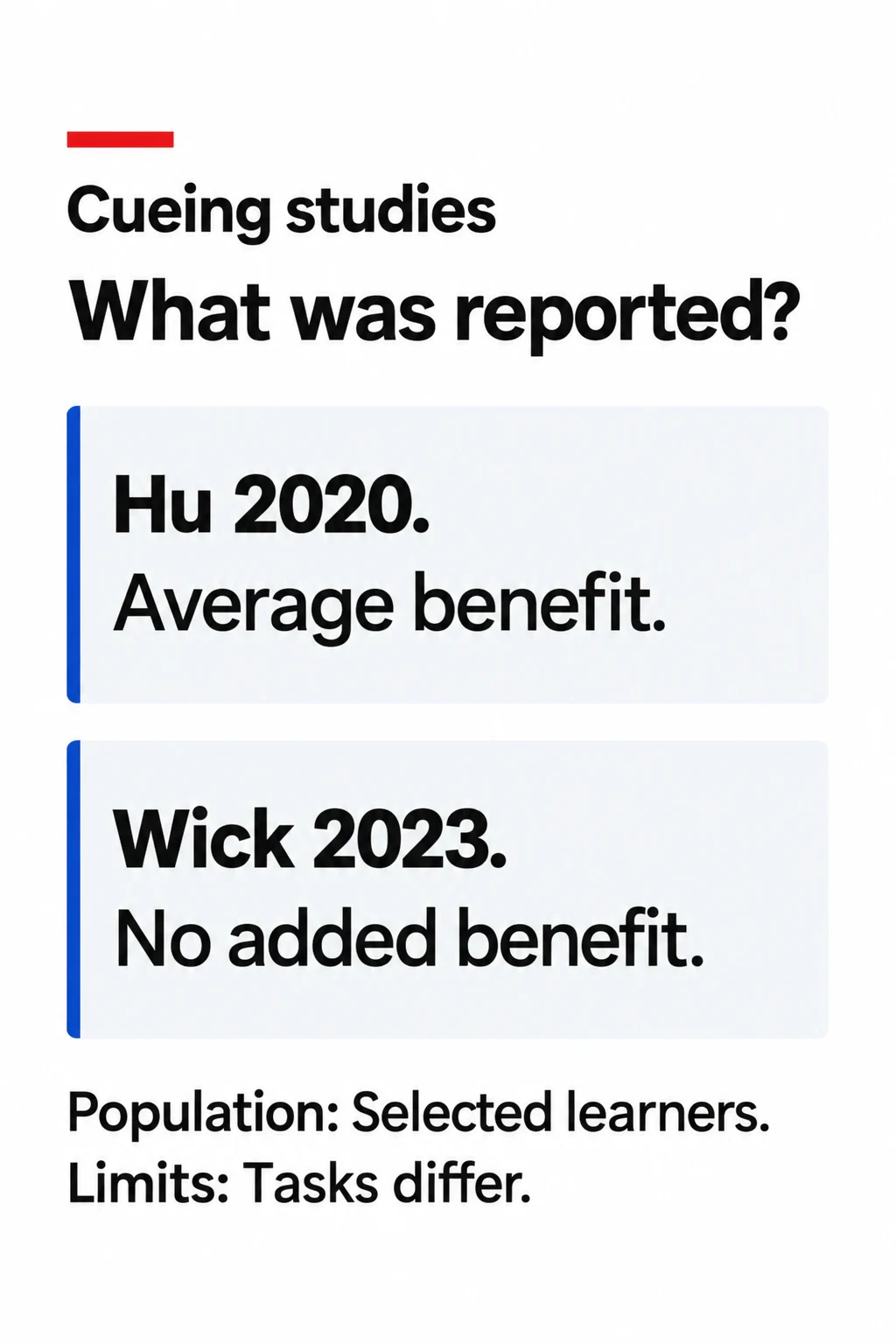
Sleep and Memory: What Consolidation Can and Cannot Do technical infographic
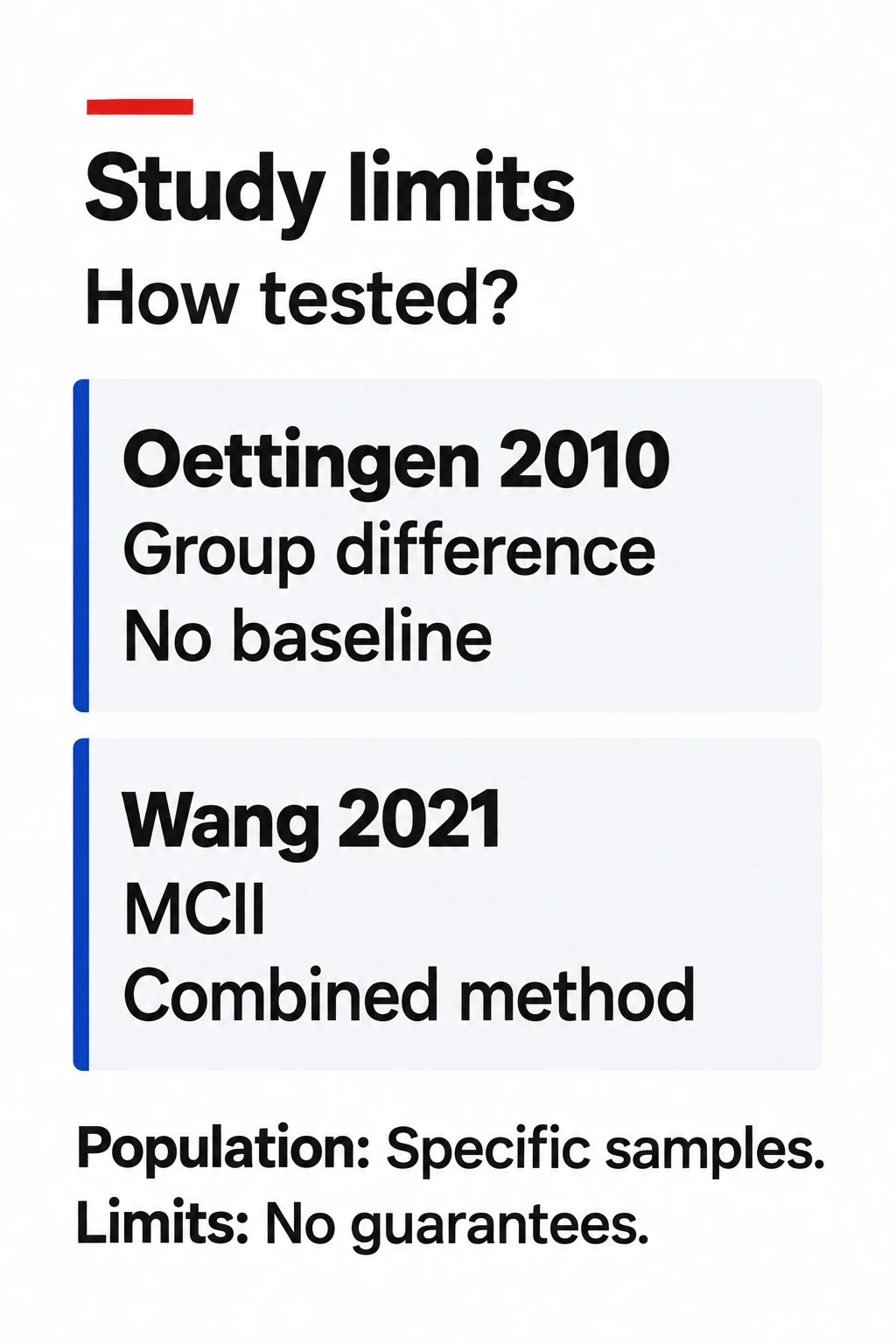
Mental Contrasting: Put the Obstacle Beside the Wish technical infographic
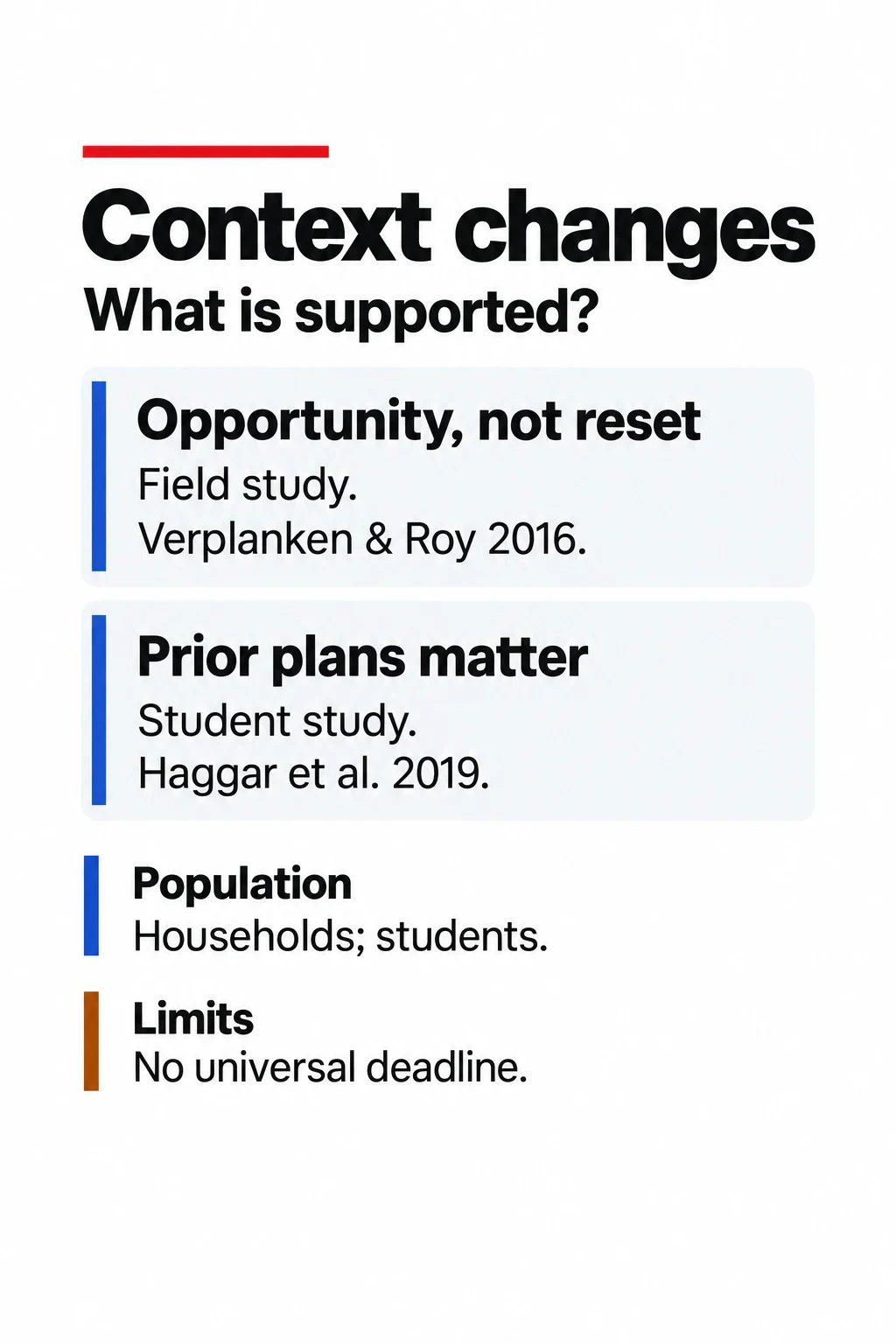
Habit Discontinuity: What a Changed Context Can Open Up technical infographic
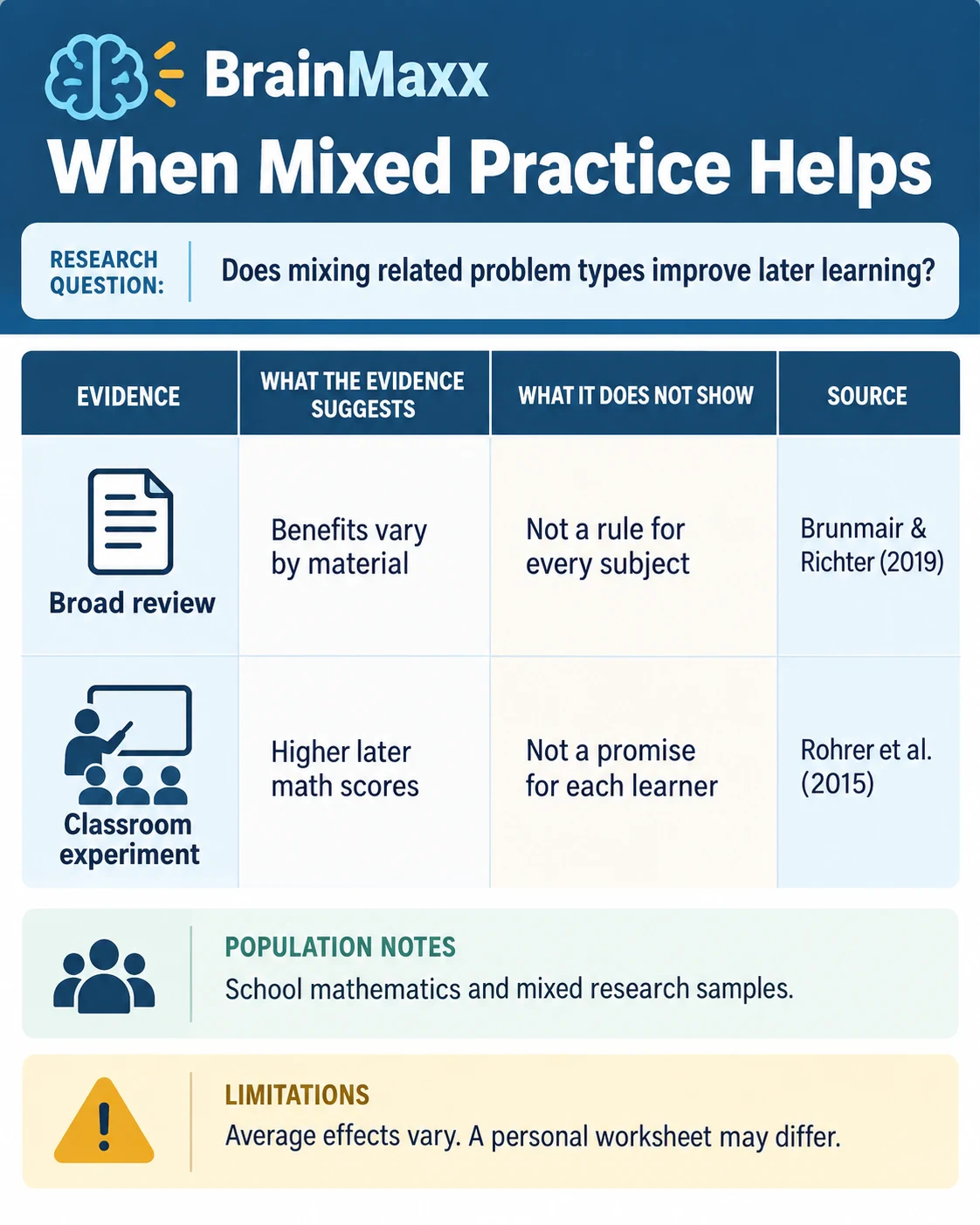
Interleaving Practice: When Mixing Problems Helps Learning technical infographic
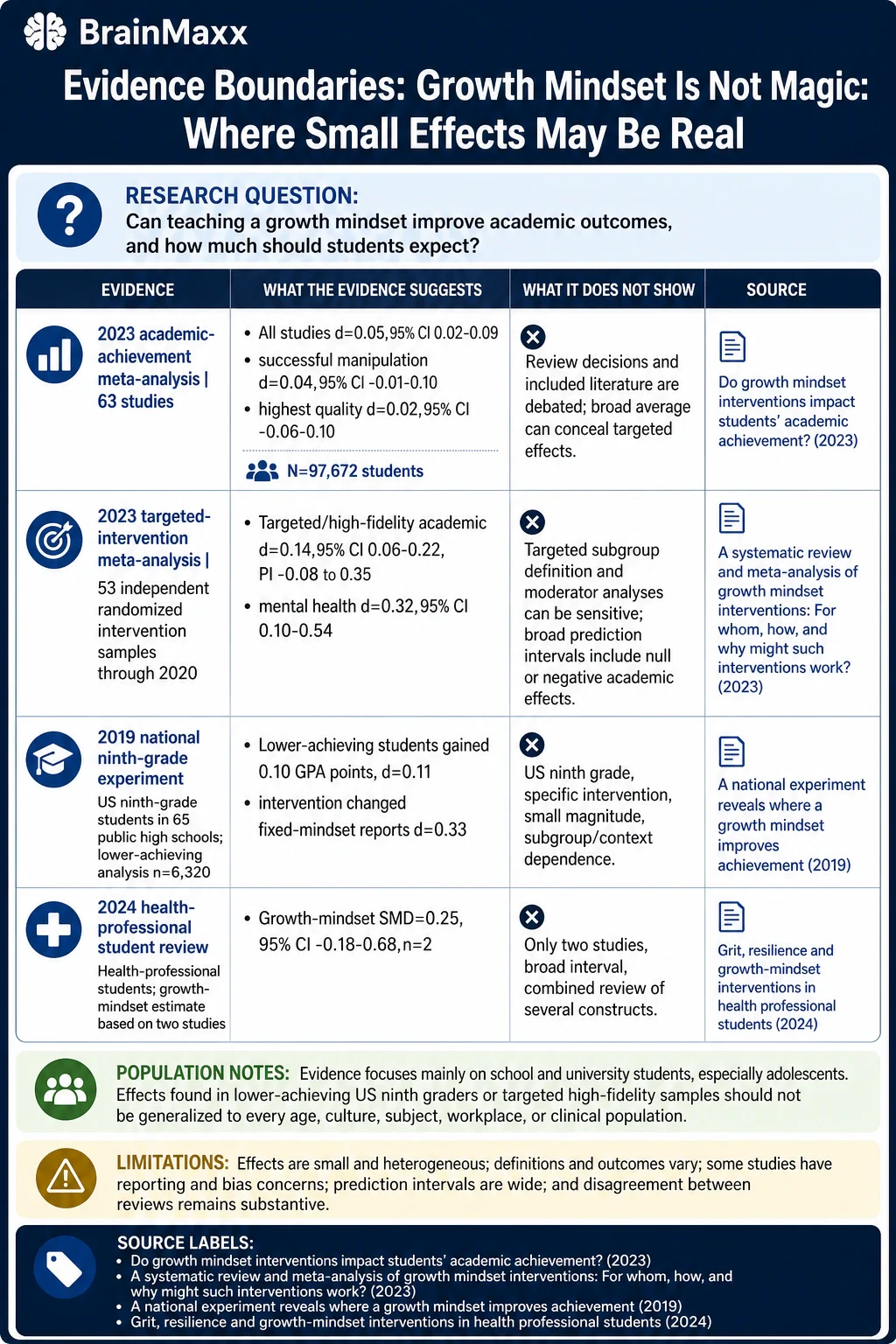
Growth Mindset Is Not Magic: Where Small Effects May Be Real technical infographic
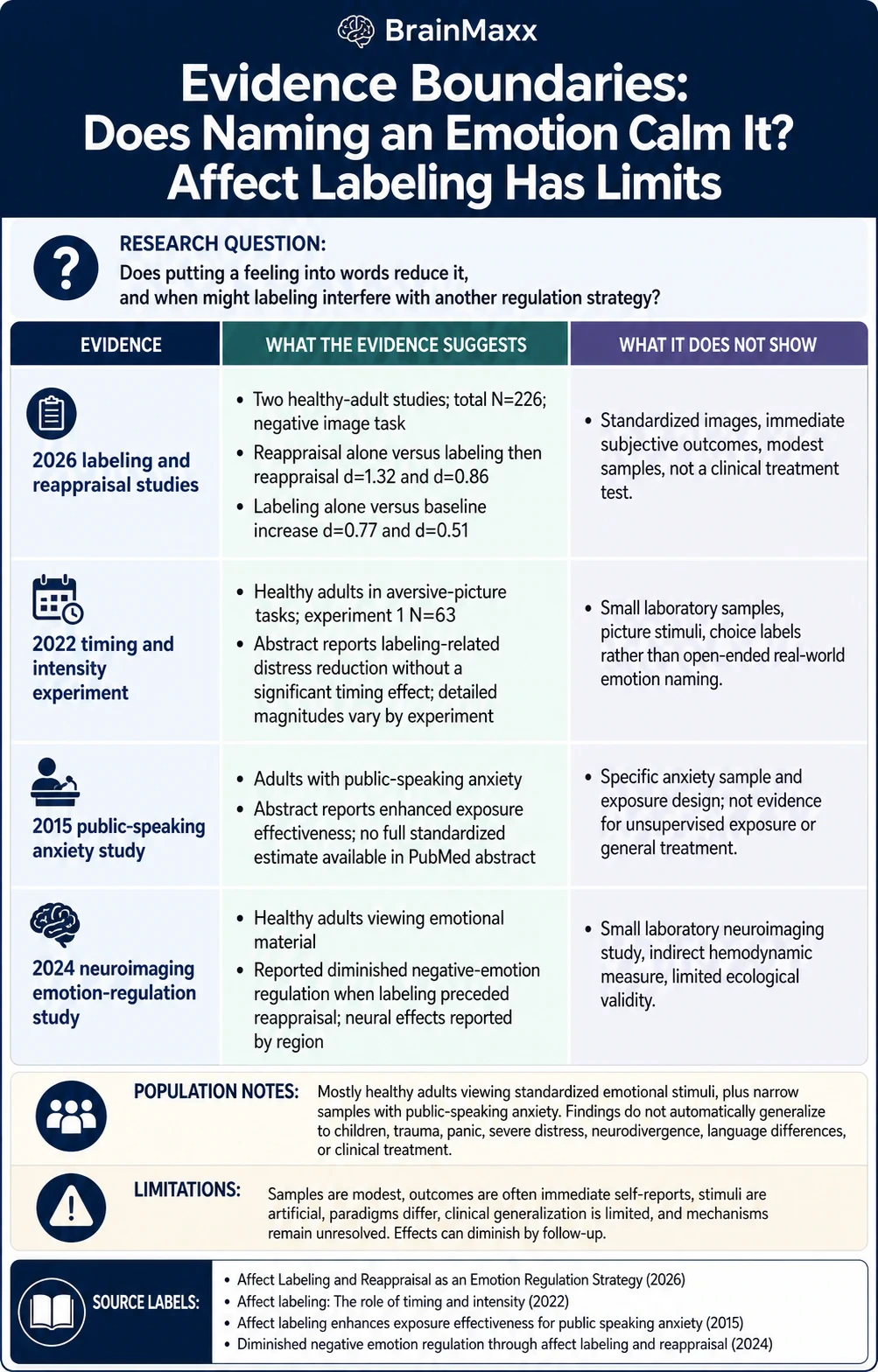
Does Naming an Emotion Calm It? Affect Labeling Has Limits technical infographic
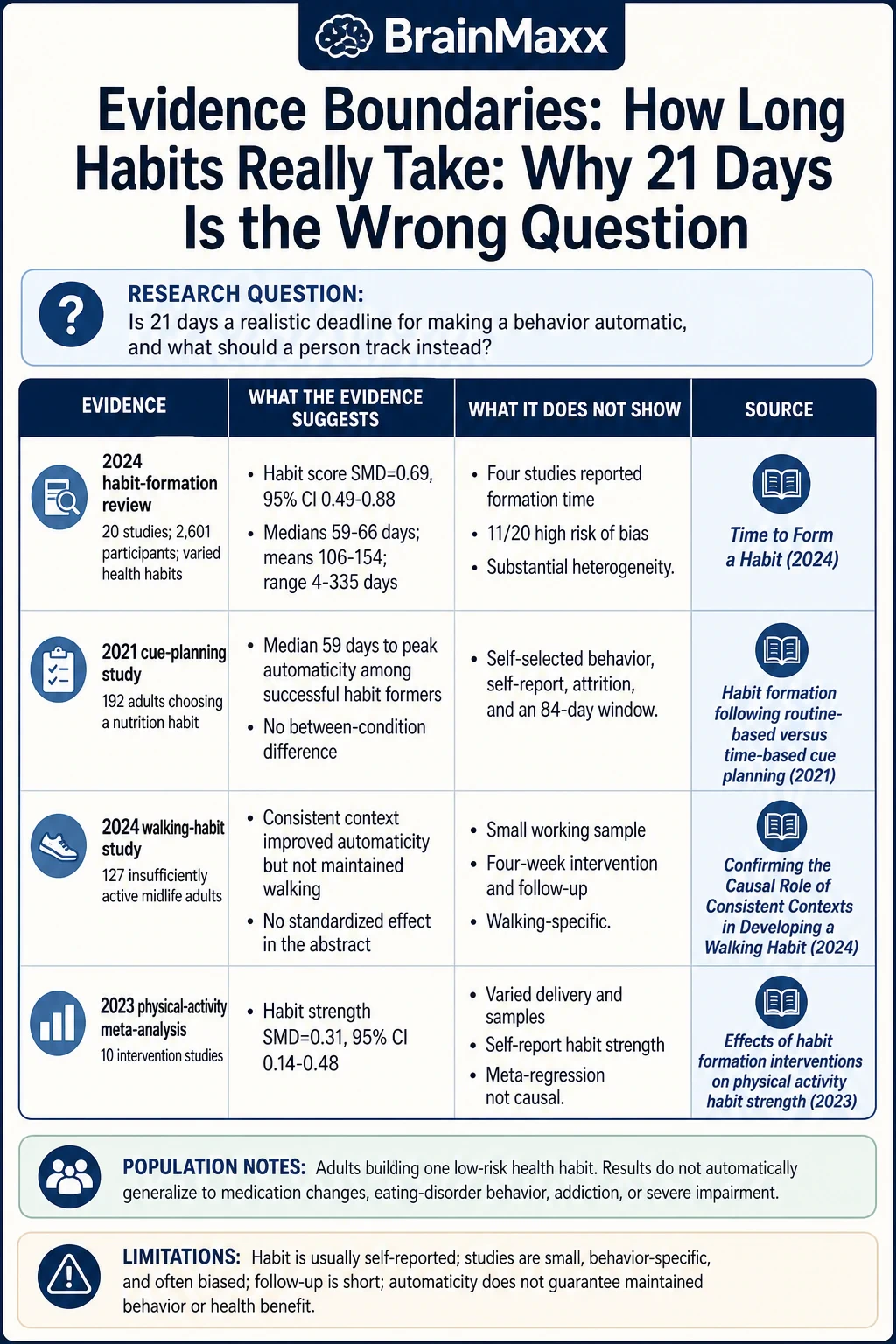
How Long Habits Really Take: Why 21 Days Is the Wrong Question technical infographic
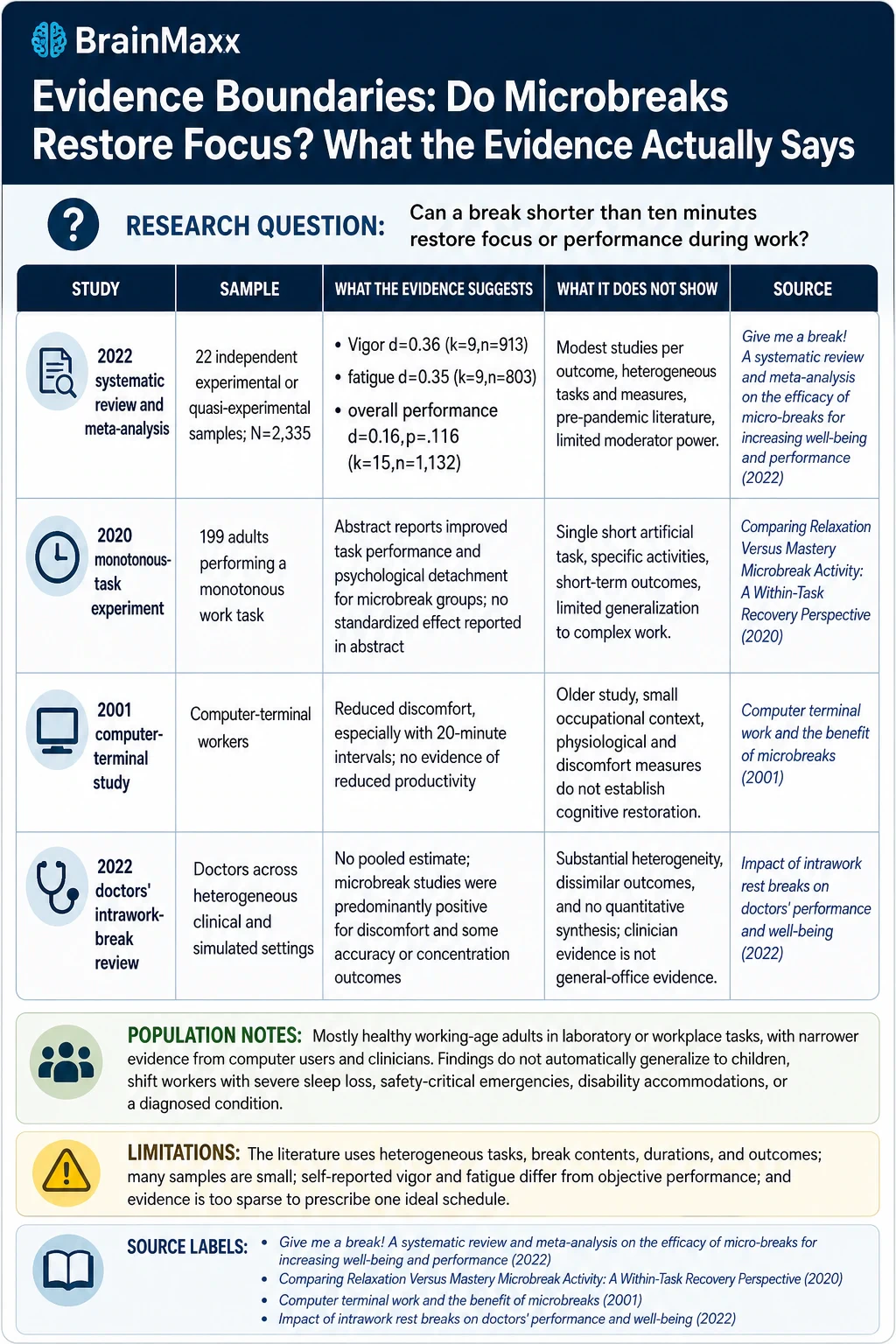
Do Microbreaks Restore Focus? What the Evidence Actually Says technical infographic
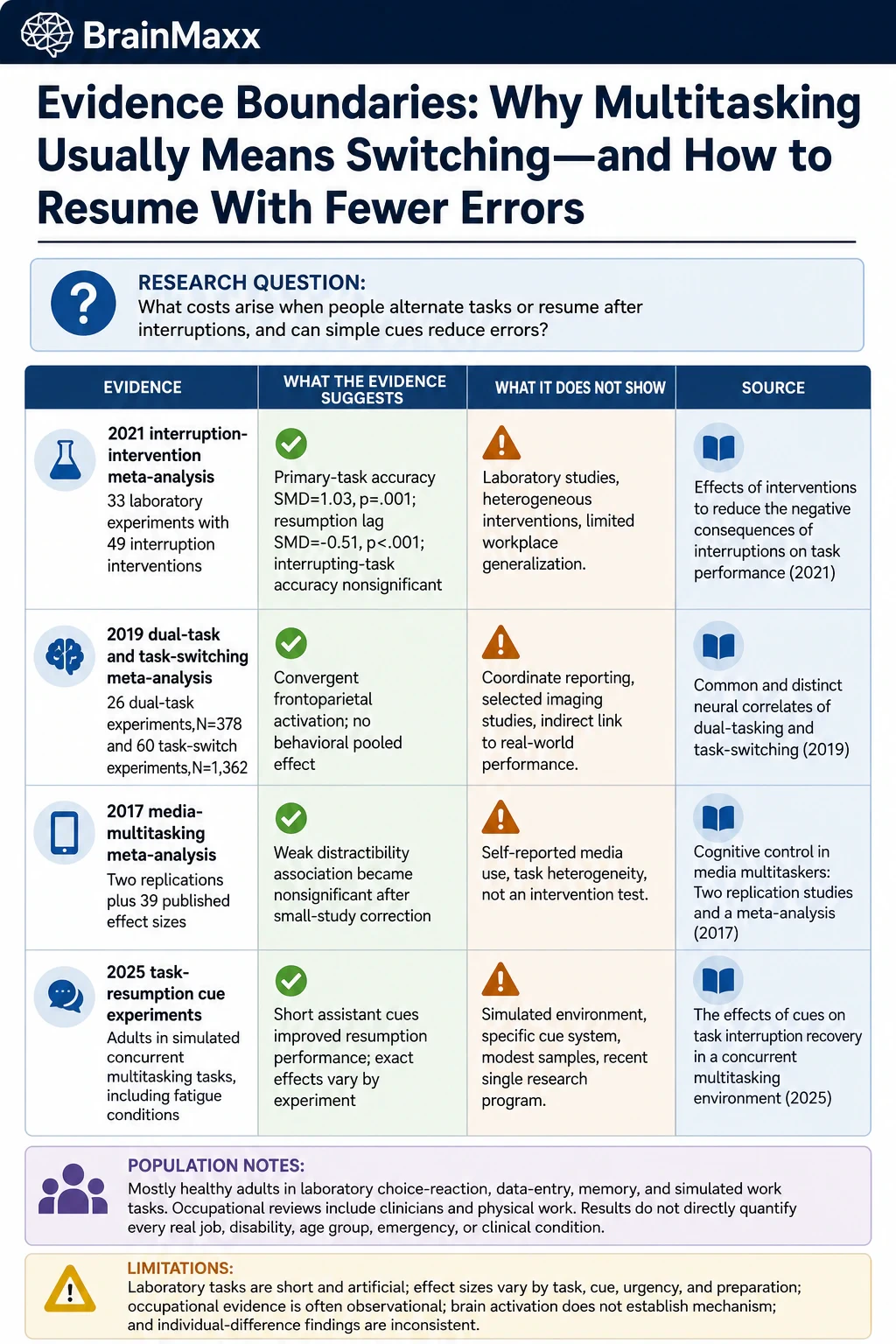
Why Multitasking Usually Means Switching—and How to Resume With Fewer Errors technical infographic
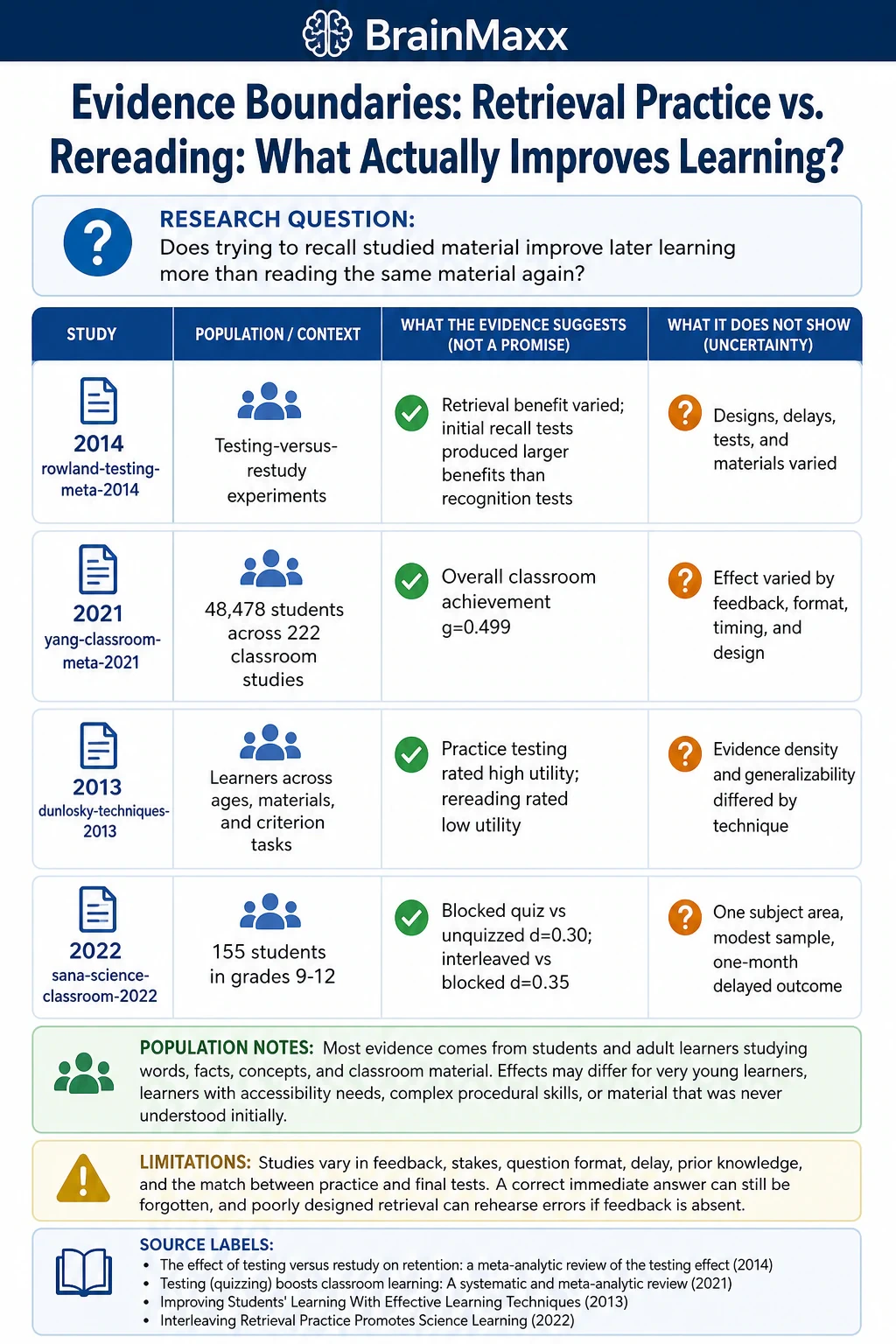
Retrieval Practice vs. Rereading: What Actually Improves Learning? technical infographic
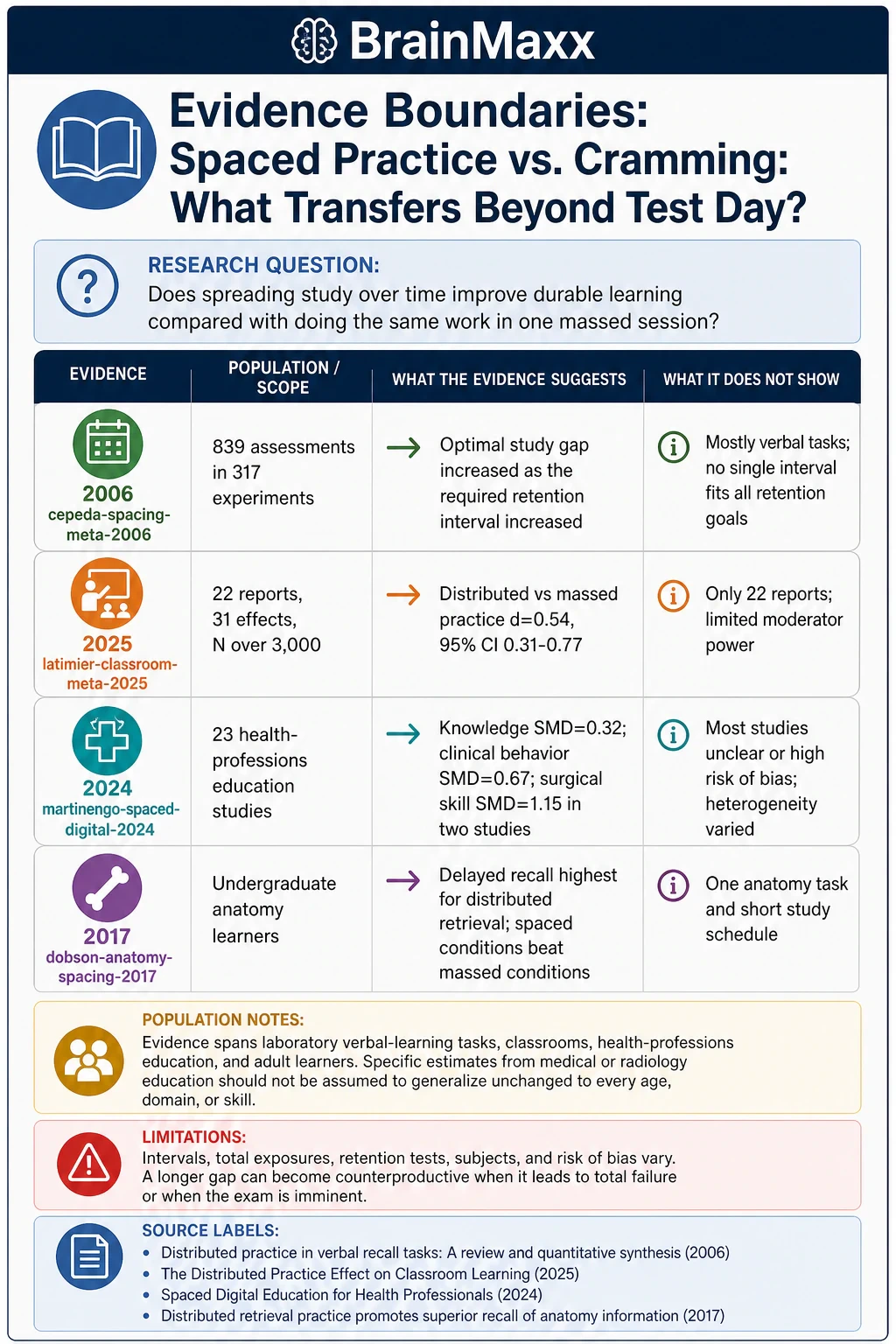
Spaced Practice vs. Cramming: What Transfers Beyond Test Day? technical infographic
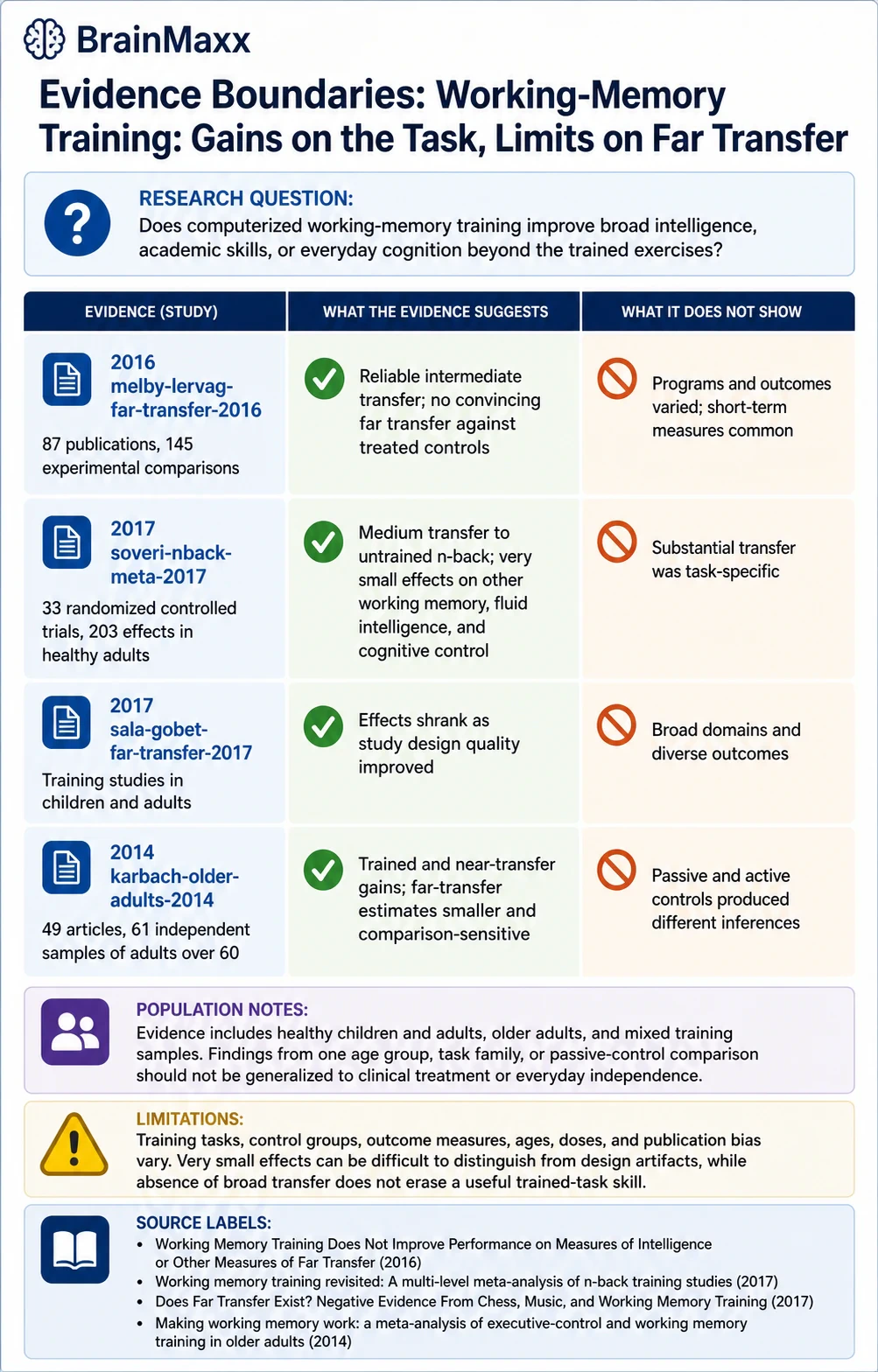
Working-Memory Training: Gains on the Task, Limits on Far Transfer technical infographic
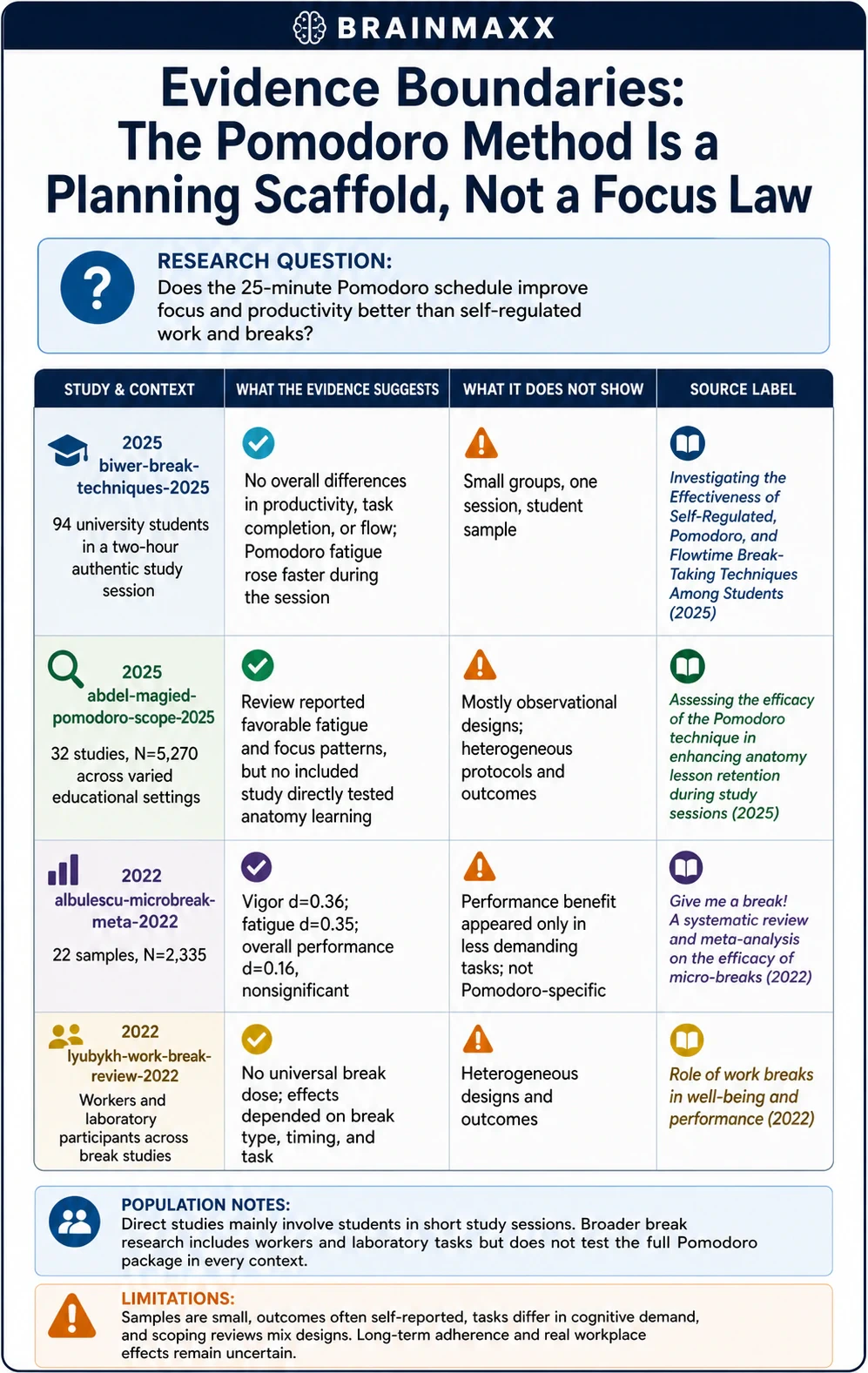
The Pomodoro Method Is a Planning Scaffold, Not a Focus Law technical infographic
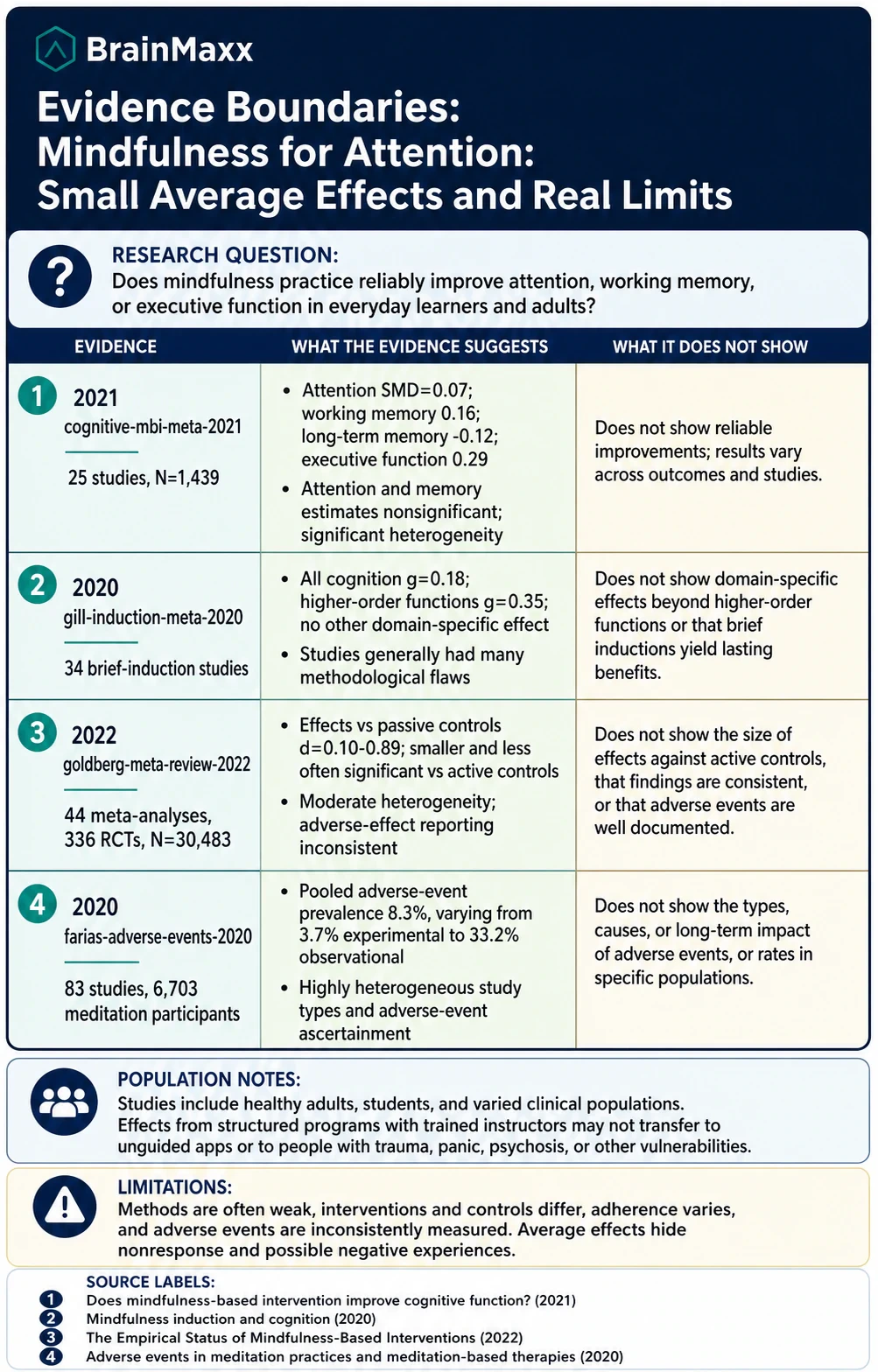
Mindfulness for Attention: Small Average Effects and Real Limits technical infographic
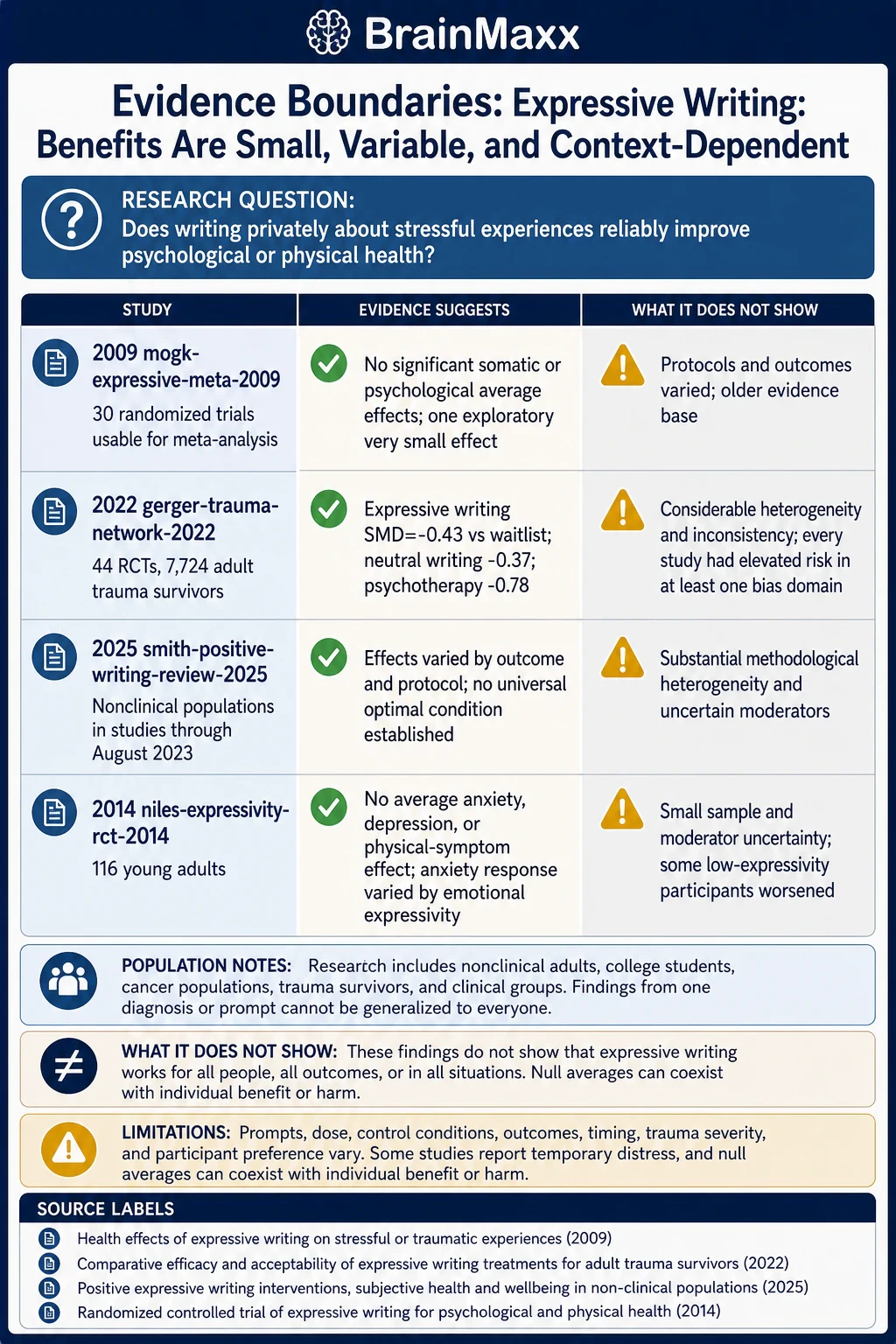
Expressive Writing: Benefits Are Small, Variable, and Context-Dependent technical infographic
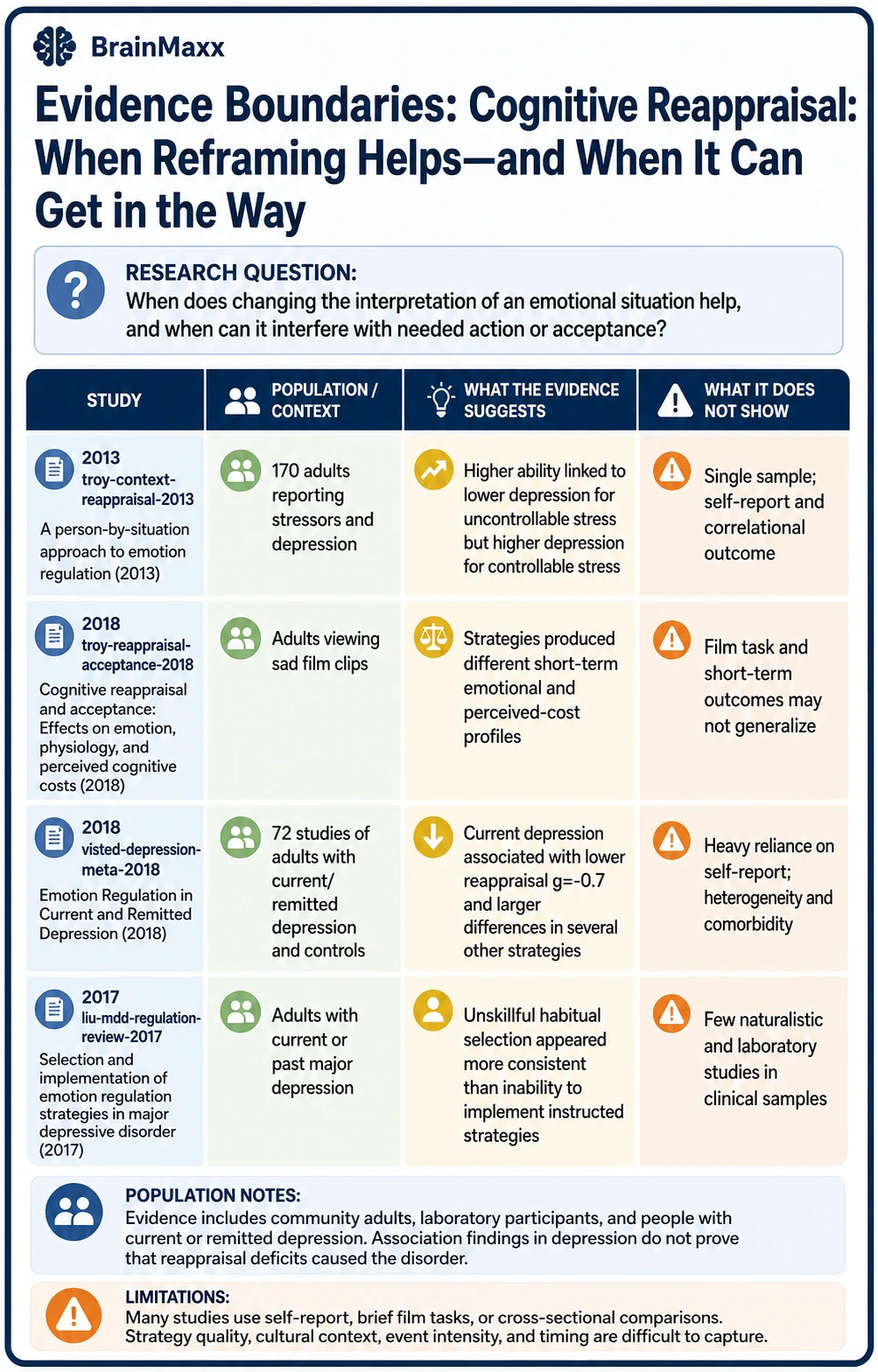
Cognitive Reappraisal: When Reframing Helps—and When It Can Get in the Way technical infographic
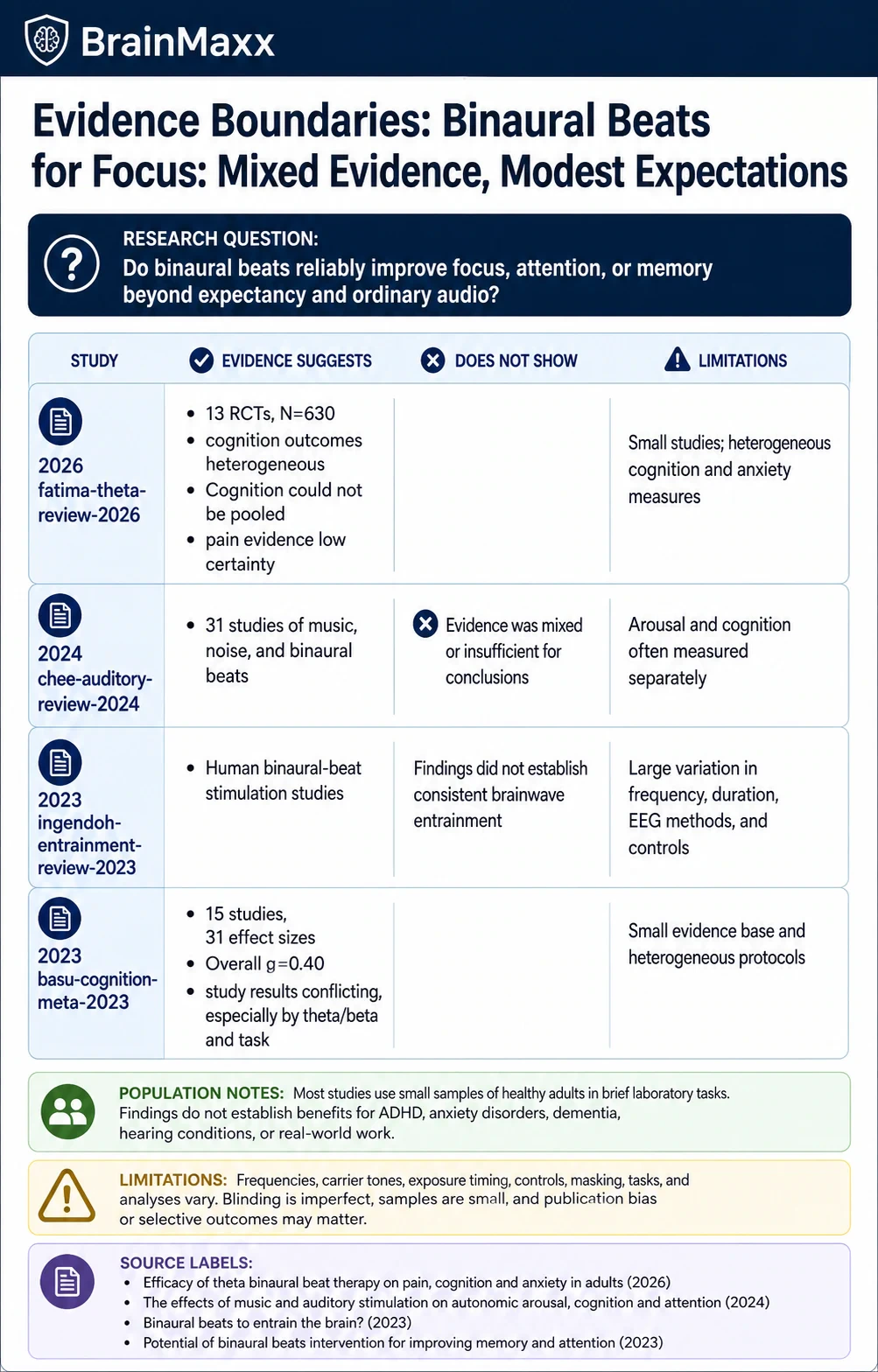
Binaural Beats for Focus: Mixed Evidence, Modest Expectations technical infographic
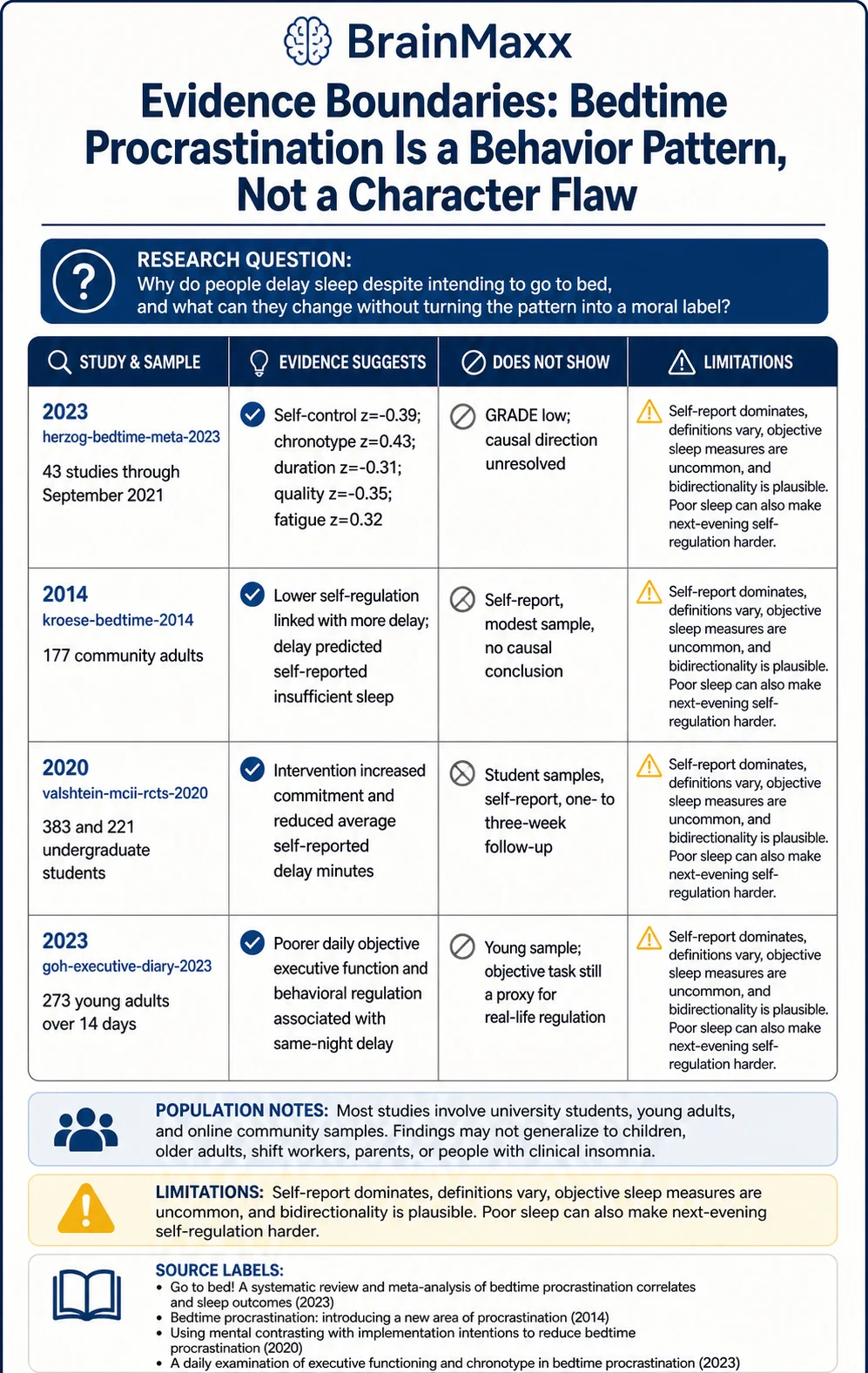
Bedtime Procrastination Is a Behavior Pattern, Not a Character Flaw technical infographic
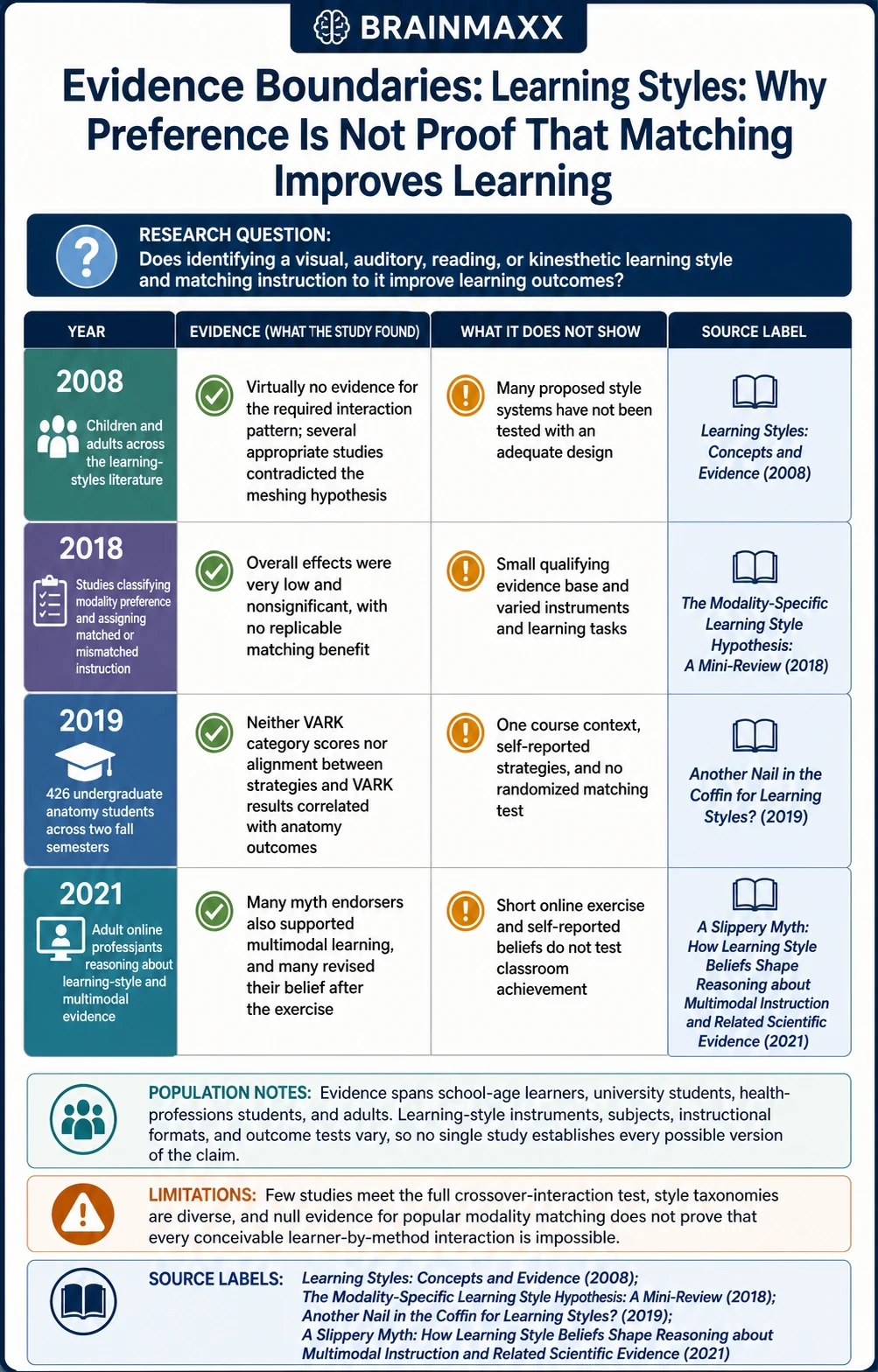
Learning Styles: Why Preference Is Not Proof That Matching Improves Learning technical infographic
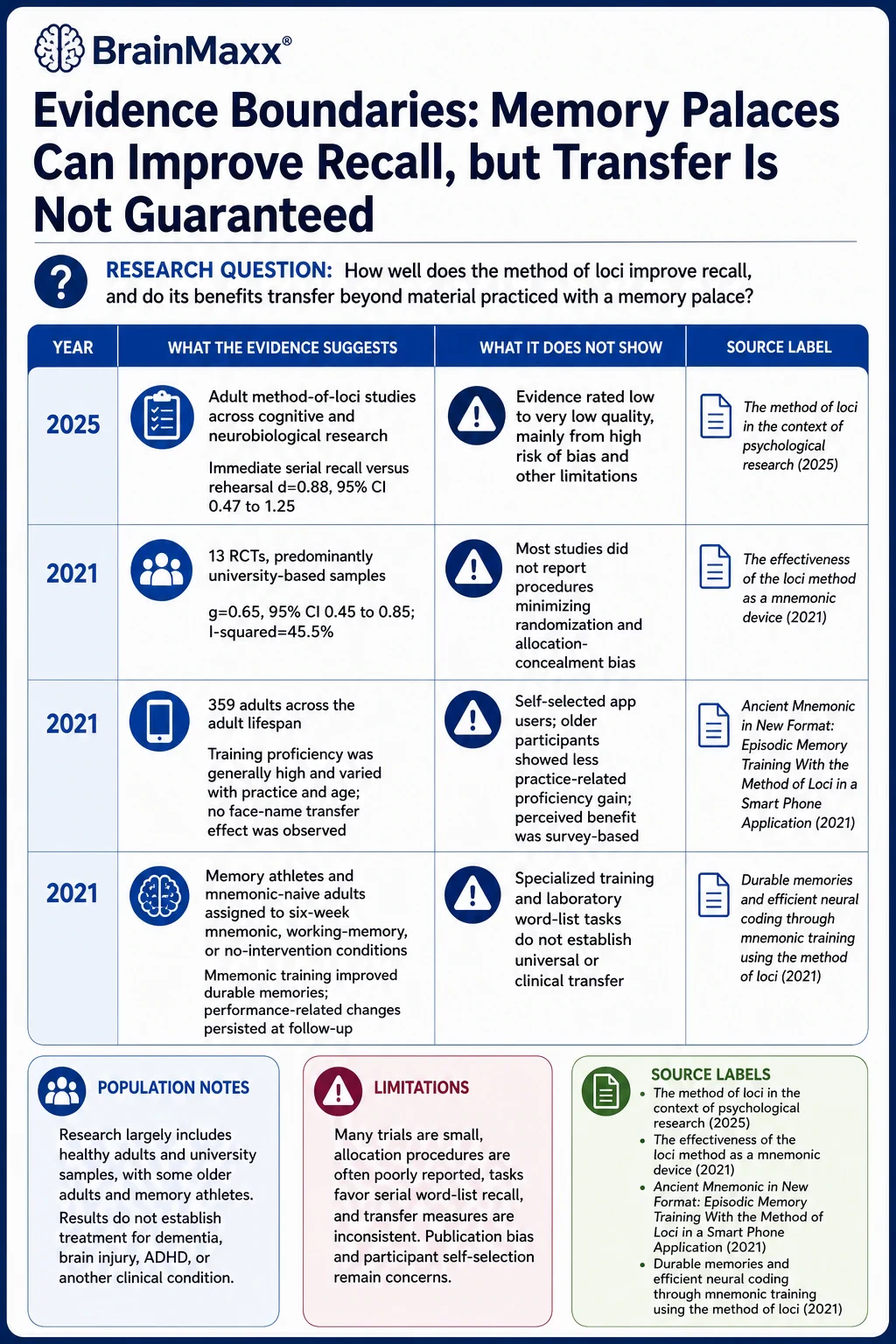
Memory Palaces Can Improve Recall, but Transfer Is Not Guaranteed technical infographic
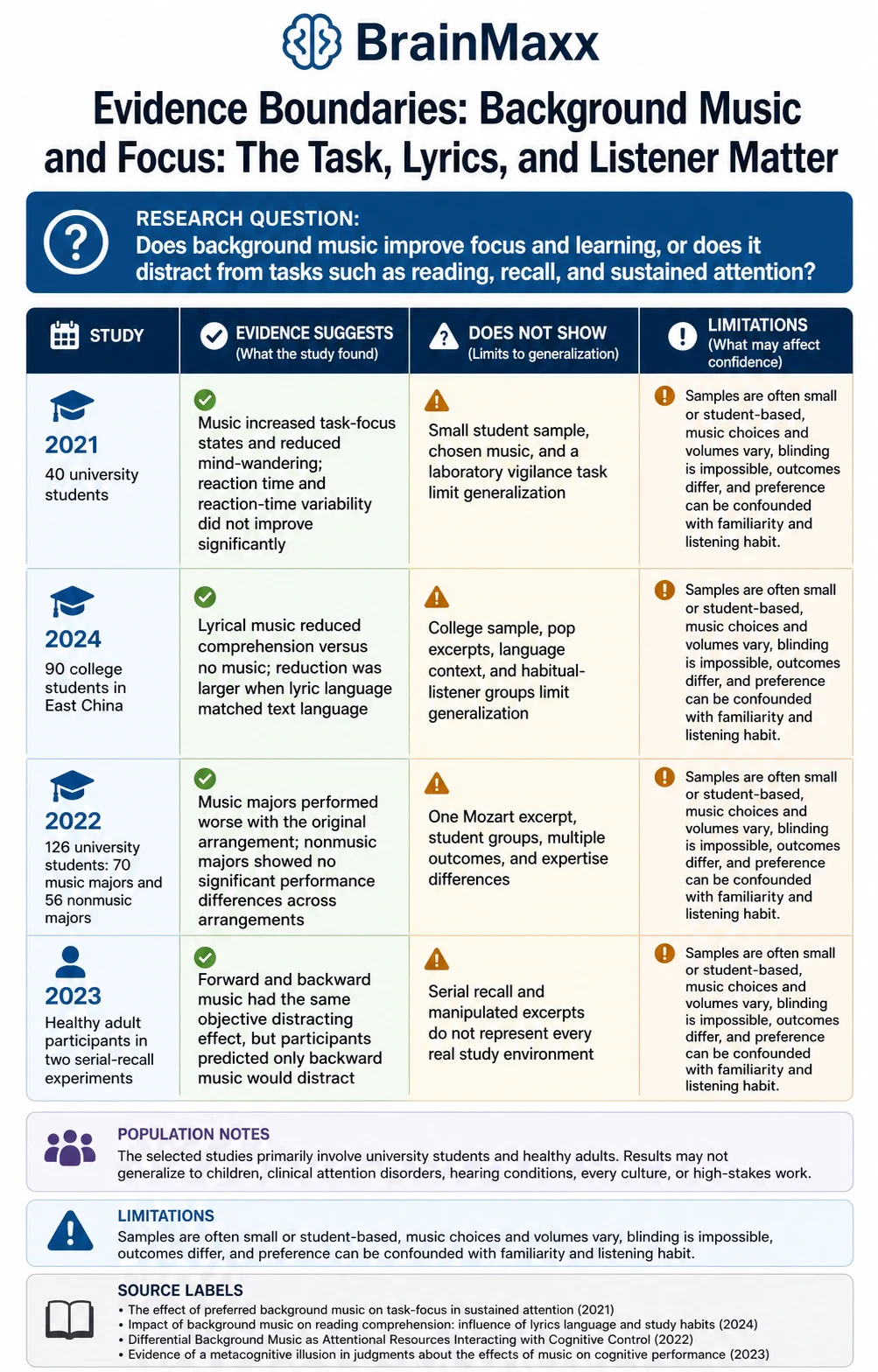
Background Music and Focus: The Task, Lyrics, and Listener Matter technical infographic
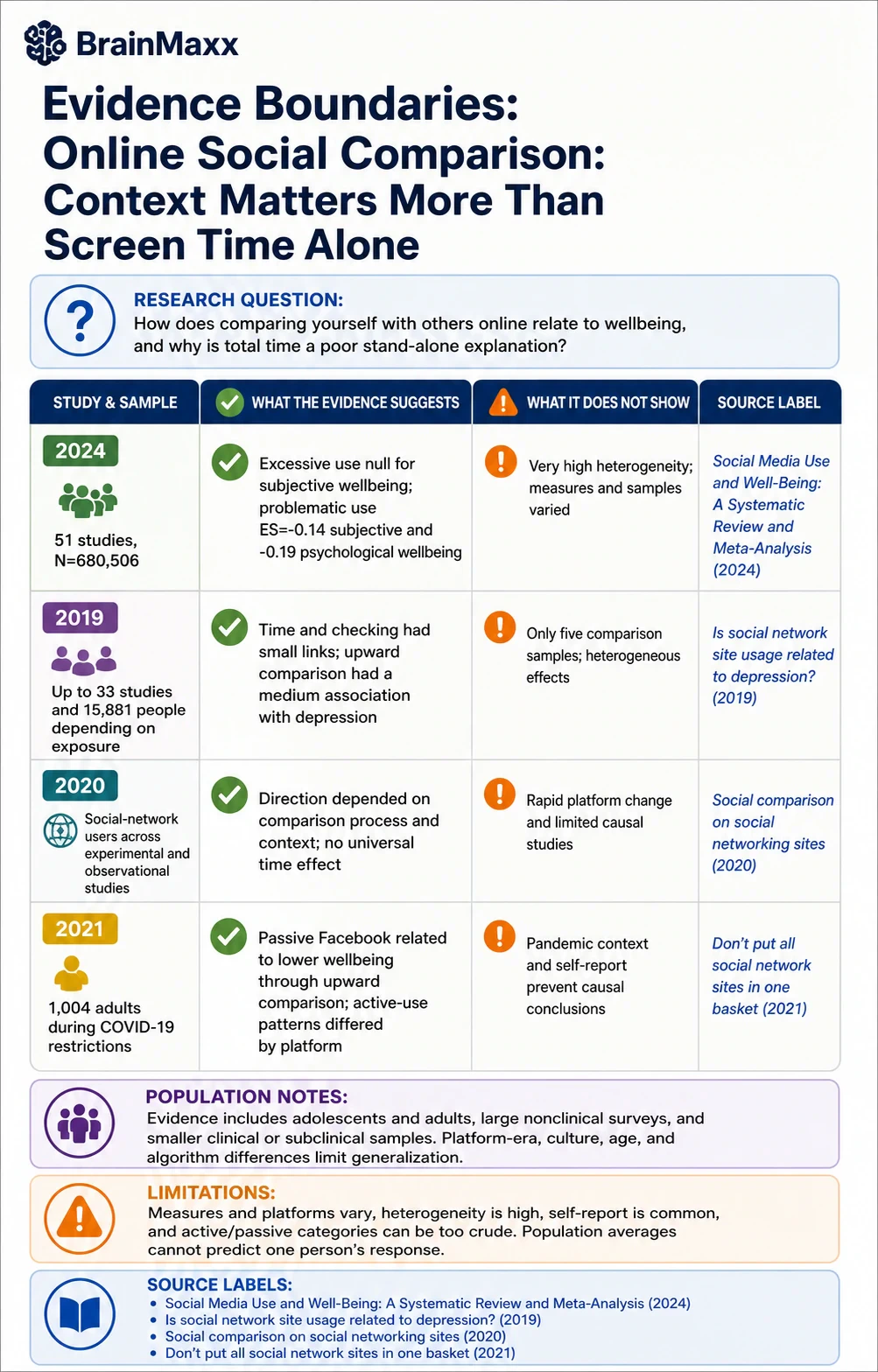
Online Social Comparison: Context Matters More Than Screen Time Alone technical infographic
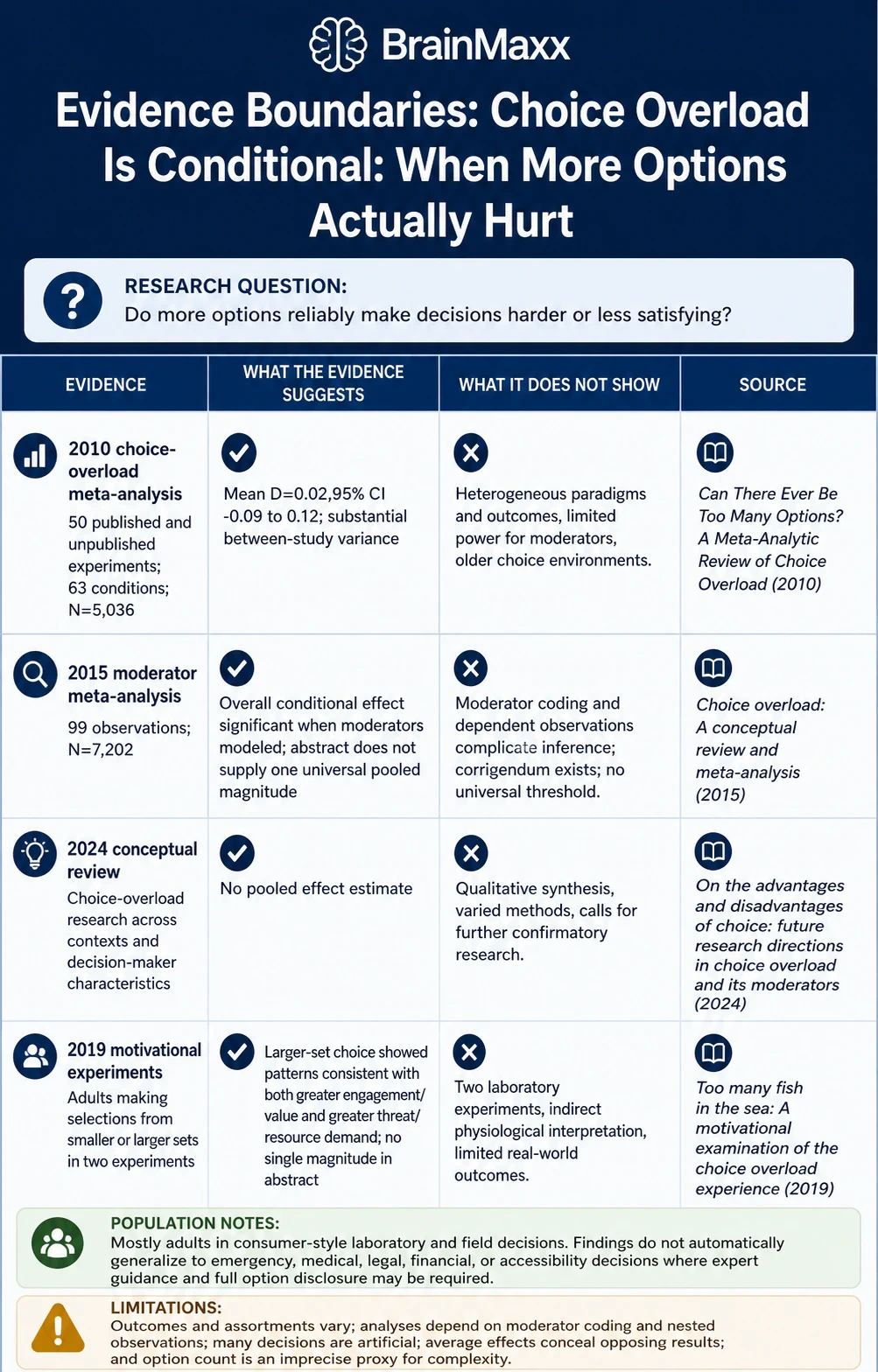
Choice Overload Is Conditional: When More Options Actually Hurt technical infographic
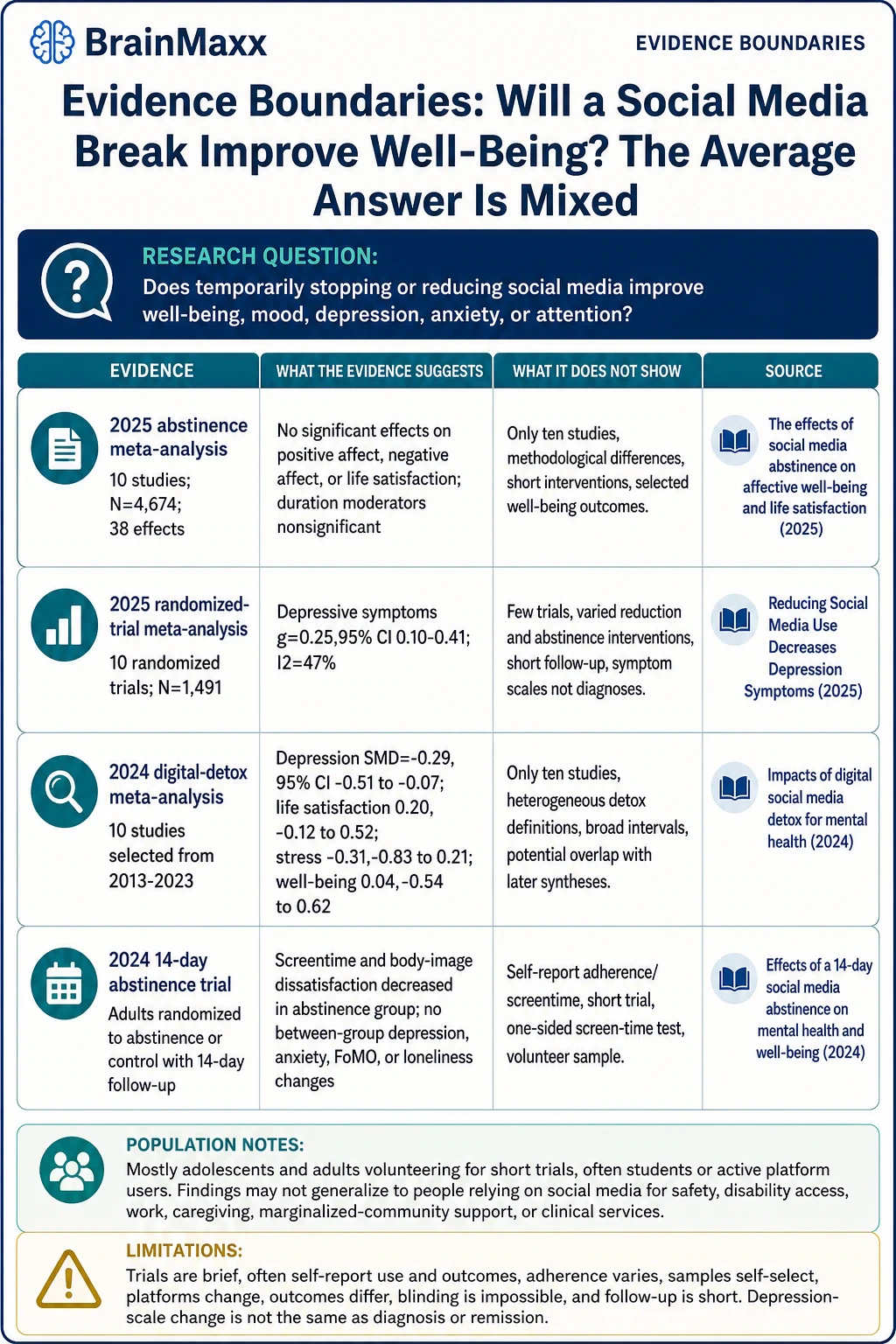
Will a Social Media Break Improve Well-Being? The Average Answer Is Mixed technical infographic
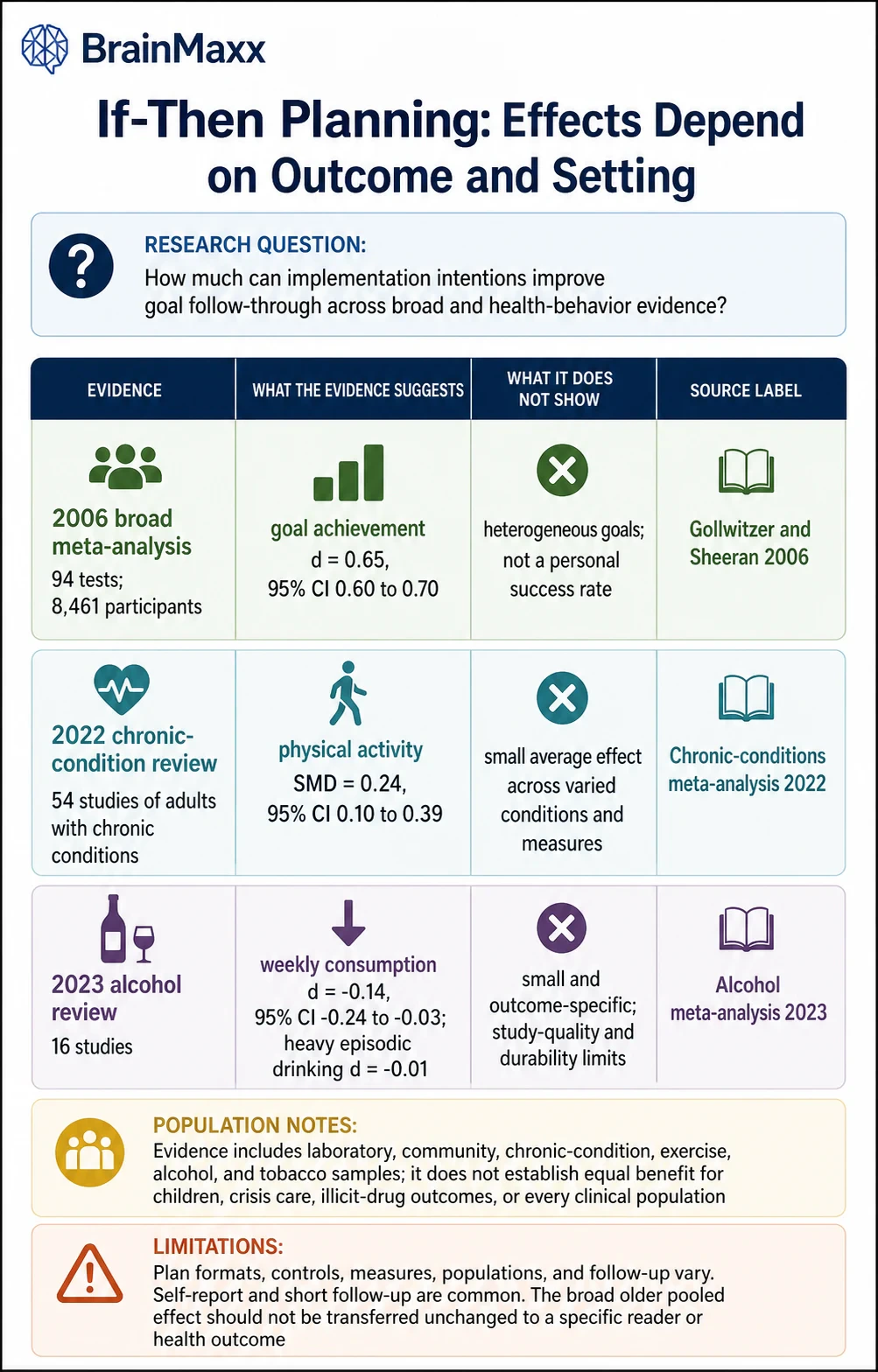
Why If-Then Plans Work Better Than Vague Intentions technical infographic
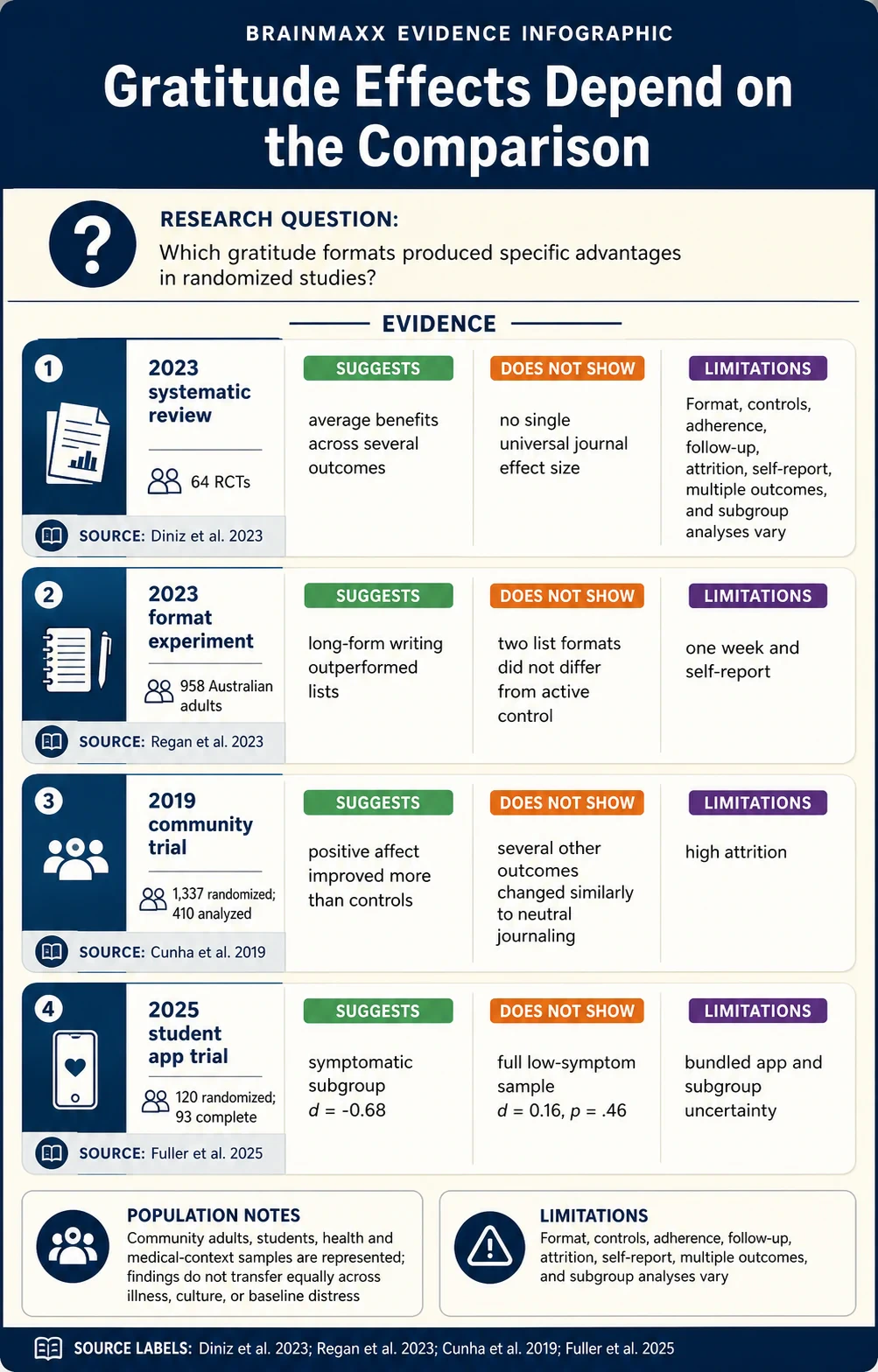
What Gratitude Journaling Can Change—and What It Cannot technical infographic
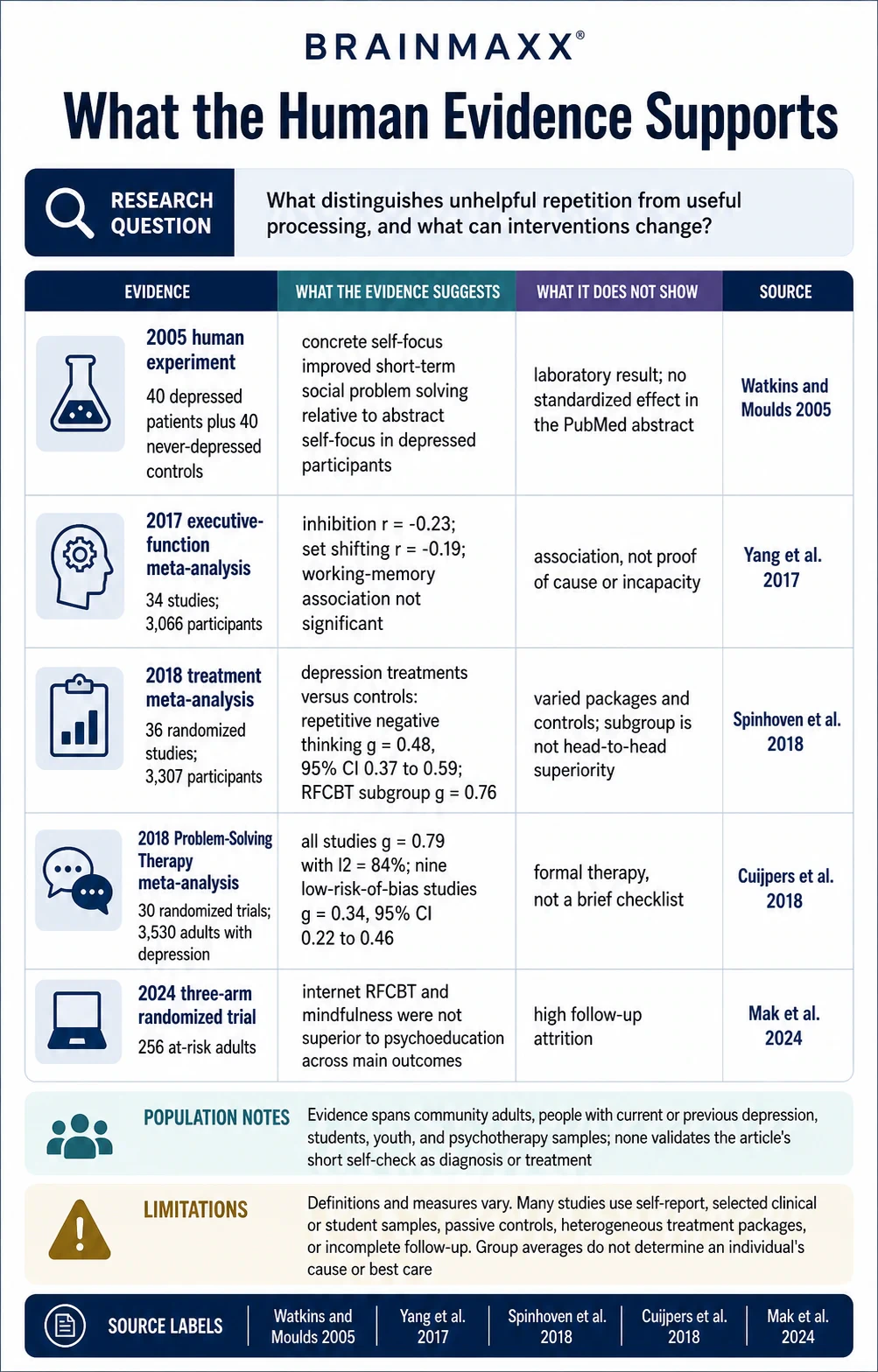
Rumination vs. Problem-Solving: How to Tell the Difference and Break the Loop technical infographic
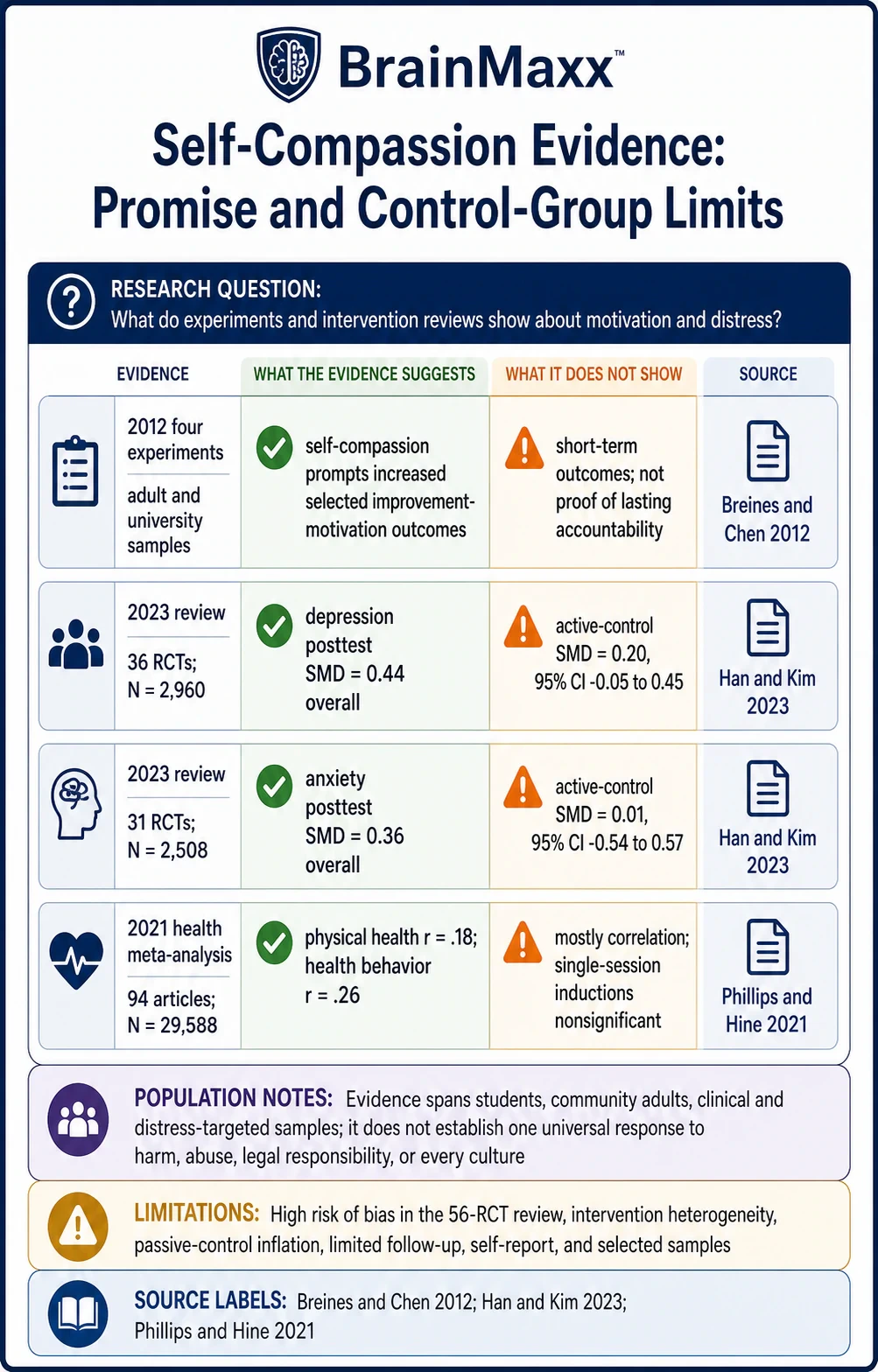
Self-Compassion After a Mistake Is Not Letting Yourself Off the Hook technical infographic
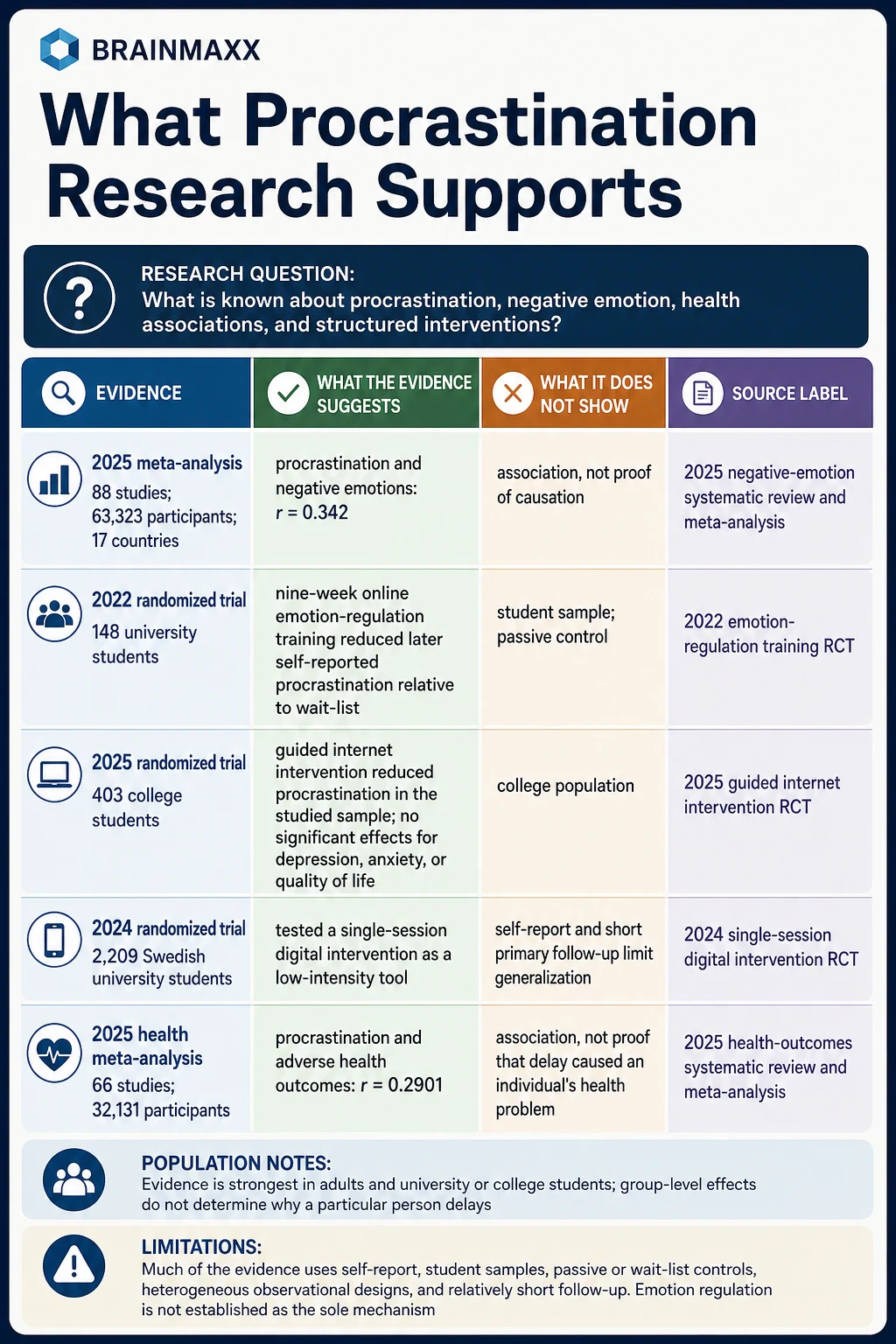
Why Procrastination Feels Like Relief—and How to Break the Loop technical infographic

Decision fatigue visual guide with sorted cards and low-noise choice cues

Healthy boundaries visual guide with calm conversation cues and relationship space

Stress recovery visual guide with soft green workspace and reflection cues

Therapy basics visual guide showing a calm first-session setting and preparation cues

Tiny habits visual guide with simple routine cues and a calm desk setup